Press Play: Dimitris Theocharis on Music, Creativity and Evolution

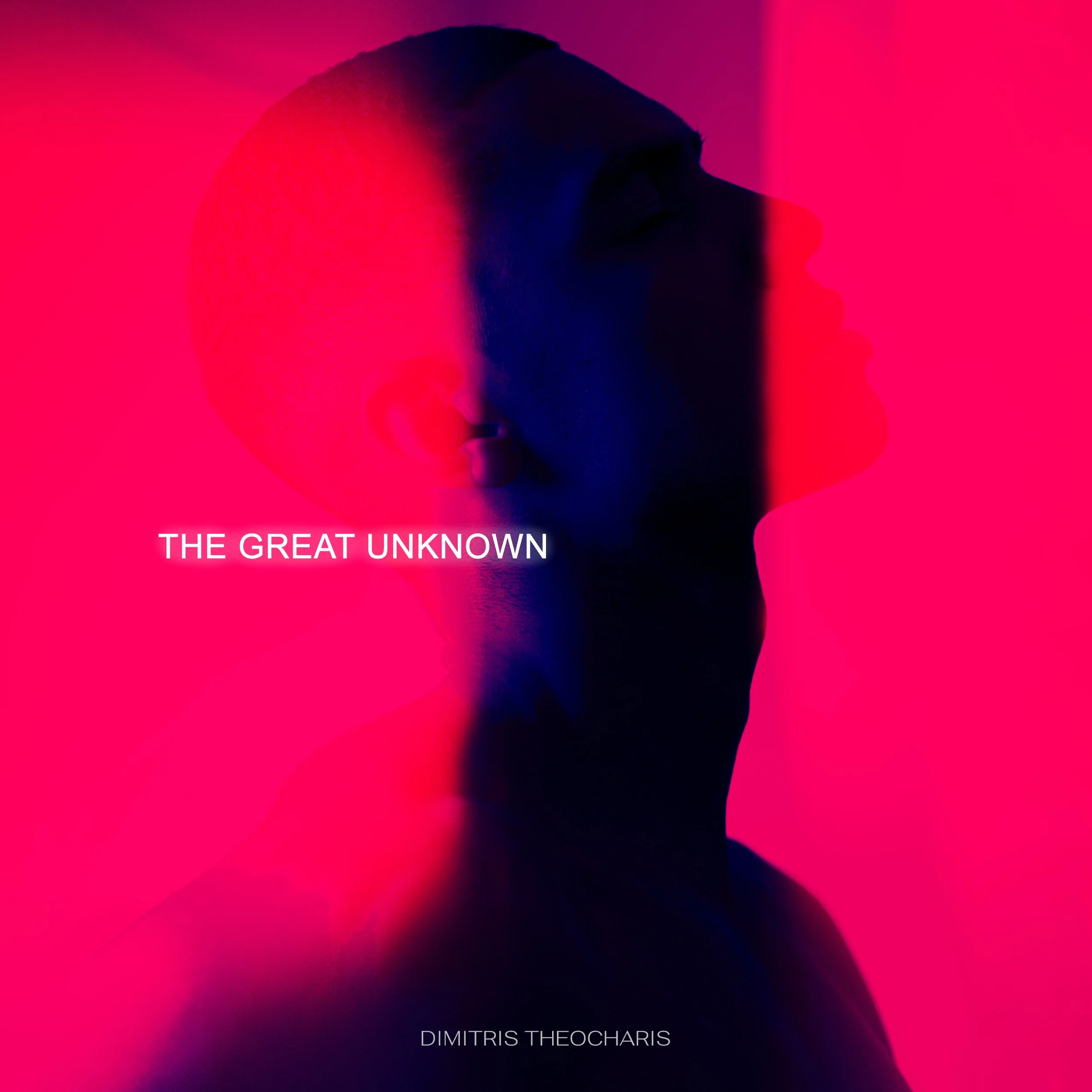
Few creatives translate atmosphere across mediums as instinctively as Dimitris Theocharis. Known for constructing images that feel both cinematic and emotionally charged, he now channels that same intensity into sound with The Great Unknown — a two-part electronic concept album that unfolds like a psychological journey.

At REY, we’ve long admired Dimitris Theocharis for his ability to create worlds — and this might be his most personal one yet.

When did you realize this would become a concept album rather than just a collection of tracks?

It wasn’t a single moment but rather a process. It all started while I was refining a track called Game Over in June 2025 which I had originally planned to release as an EP. Whilst I was still in the editing process, new lyrics and ideas for songs started flooding my head, including fragments that would later become In This Life and Post Love. That’s when I realized I was in a creative flow and decided to direct that energy toward a specific concept. Pandora’s Box and the seven deadly sins became loose reference points for the album, as I wanted to write and create songs reflecting both my observations of the world and my own journey through it.

The album moves from external observation to internal transformation. Was that duality something you planned from the start?

Although some of it was intentional, it also emerged naturally. In contrast to my first album, which was more spiritual and up in the ether, I wanted to get my hands dirty, so to speak and engage with the current state of the world, its systems, contradictions and inevitably my own journey and life experiences. The shift from the external to the internal felt honest.

The themes of excess, desire, and control feel very current. Were you reflecting society, or something more personal?

Primarily the societal structure we’ve inherited and continue to perpetuate. It’s built around control and manipulation. Nothing new, but nowadays it feels far more evident in almost every aspect of our lives. The “watchful eye of God” has now become an algorithm that tracks and analyses every step. The question is to what end? How is the access to every small detail of our lives being used? Is there a way out? Are we eventually going to be subscribing to freedom? Could living off-grid become a utopia? Or is utopia a state of mind? Desire has been reduced to swiping left or right, to momentary satisfaction that leads nowhere and ultimately means nothing, as expressed in Pleasure on Repeat, a song partly inspired by gay club culture and chemsex parties. It comes from a very real need for human connection, yet there’s something deeply ephemeral and addictive about the way we deal with desire that resembles a quick fix, void of emotional depth. I quite like how this song exists in two versions within the album. The electronic version feels innocent and fragile whereas the acoustic version feels more mature, sung from experience, almost with hindsight and wisdom. Then Money starts with the question: how much does your life cost? A very strong statement derived from the expression “time is money.” If time is money, then a lifetime has a price. That’s a disturbing conclusion, but as abrupt as it sounds, we live in a society that is addicted to consumption on every level and the pursuit of wealth.

The Sanskrit message, “it is never enough,” feels like the spine of the project. Why was that the idea that anchored everything?

Because it’s universal. It cuts through culture, time, and identity. That endless cycle of wanting more is both the cause of suffering and the force that drives change. It drives everything forward, but it also traps us. Once that became clear, everything else aligned around it.

Utopia is a clear turning point. What does that moment represent for you creatively and emotionally?

Utopia is a state of mind. It’s a pause. A bridge. Up until that point, everything is outward-facing and observational. Utopia breaks that momentum and demands stillness. It represents the desire, or perhaps the need, to escape from everything negative happening around us. It asks us to stop for a moment, breathe, and reconnect with what still exists: the sun, the sea, nature, ourselves. When all the noise stops, the senses awaken again. But underneath that stillness, the storm is always near. The lingering fear of war, destruction and collapse remains.

The second half of the album feels more vulnerable. Was it harder to create than the first?

Not really. The first half was actually harder because it’s more controlled. The political, philosophical, and existential themes pushed me technically as a writer and forced me to experiment more with genre, sound and structure. The second half required letting go of that control. I was more exposed, less protected by the concept itself, but I was entering a more familiar territory as I’ve always been drawn to emotionally charged and introspective music. The real challenges were Illusive Reality, Eternal Youth, Dominion, and Post Love. For example, with Post Love, I didn’t want it to become melodramatic or fall into the typical clichés that come with breakup songs. I wanted it to remain honest, dignified, minimal, and personal, while still open enough for listeners to project their own experiences. Those songs were difficult to finish. I probably wrote several hundred variations.

Tracks like Money and Dominion feel powerful and confrontational, while Post Love and Vein feel intimate. Do you approach them differently when producing?

Yes, the approach shifts with intention. The wording is always carefully considered, but the complexity, structure and nuance differ significantly. Money moves between the ridiculous yet very real demands and expectations of modern life, expressed through a climactic rap that builds toward the anxiety of chasing money to meet those demands. The melodic, almost mantra-like chorus softens that tension and creates a playful balance between fixation and release. Dominion is more restrained, almost void of melodic elements, yet sonically very cinematic, as I was attempting to recreate a sonic war zone. By reinterpreting quotes from the Book of Genesis as a gender-neutral intro and outro, I created parentheses within which I could reflect on our systems’ obsession with dominance and power, and ultimately the destructive nature of that. Post Love is a deconstructed verse-chorus song. I flipped the structure around, using the first verse as a fragile, poetic and melodic intro, while transforming the initial spoken “dear diary” intro into the central section of the track, concluding with a mantra-like ode to love where past, post, lost, last and new love merge into one. Vein works more instinctively, something that unfolds rather than being consciously constructed. It reads as a love song, but was in fact inspired by the treatments I received related to a health issue I faced last year. I kept it in its pure acoustic form, as I felt the emotional weight was amplified through its simplicity. Technically, the process differs, as does the mindset. However, each track reveals a different part of the same story.

Do you have a favorite track, or one that feels closest to who you are right now?

Possibly Vein. It was probably the easiest song to write because it came very naturally, however, each track is dear to me. Right now I’m trying to decide which track to remix next. I’m somewhere between Pleasure on Repeat and Dominion. Any suggestions?

The soundscape is constantly shifting. How do you balance experimentation with cohesion?

By staying anchored to the emotional and conceptual core. The sound can evolve, but the intention remains consistent. Utopia also plays an important role in that balance, as it shifts the perspective of the album. Cohesion doesn’t necessarily come from repetition. It can also emerge through progression, juxtaposition, or clarity of purpose. I think the album creates a sonic arc where the listener moves through different genres and emotional states while still remaining connected to the main idea.

As a fashion photographer, your work is highly visual. Do you “see” your music in images as you create it?

Most of the time, yes. Whilst putting the album together, I kept visualizing the tracks as part of a dark, dystopian, futuristic musical, with my fictional heroine Domina moving through the various stages and emotional states of the album. The opening track acts as both an introduction to adulthood and an entry point into the space of The Great Unknown - Earth? the human mind? Or perhaps both - where everything is possible…

Is there a direct dialogue between your photography and your music, or do they exist as separate expressions?

There is definitely a dialogue between them, but I believe each medium ultimately stands on its own merits.

If The Great Unknown had a visual campaign, what would it look like?

I had several visual ideas for the first seven tracks, mostly inspired by a twisted post-apocalyptic, dystopia, decayed luxury, and fragmented human connection. Unfortunately, I didn’t have the time to fully explore that direction this time.

How does fashion influence your sound, if at all?

Fashion deals a lot with identity, projection, and transformation. Those ideas are deeply embedded in my approach to music.

What’s next for you, are you leaning more into music, or continuing to merge both worlds?

The goal isn’t to choose one over the other, but to explore how both forms can coexist and eventually merge more deeply. That intersection is where things could become more interesting for me.

And for REY, anything exclusive you can share about what’s coming next?

There’s definitely more music coming soon. Alongside that, I’m working on my photography book and exhibition.

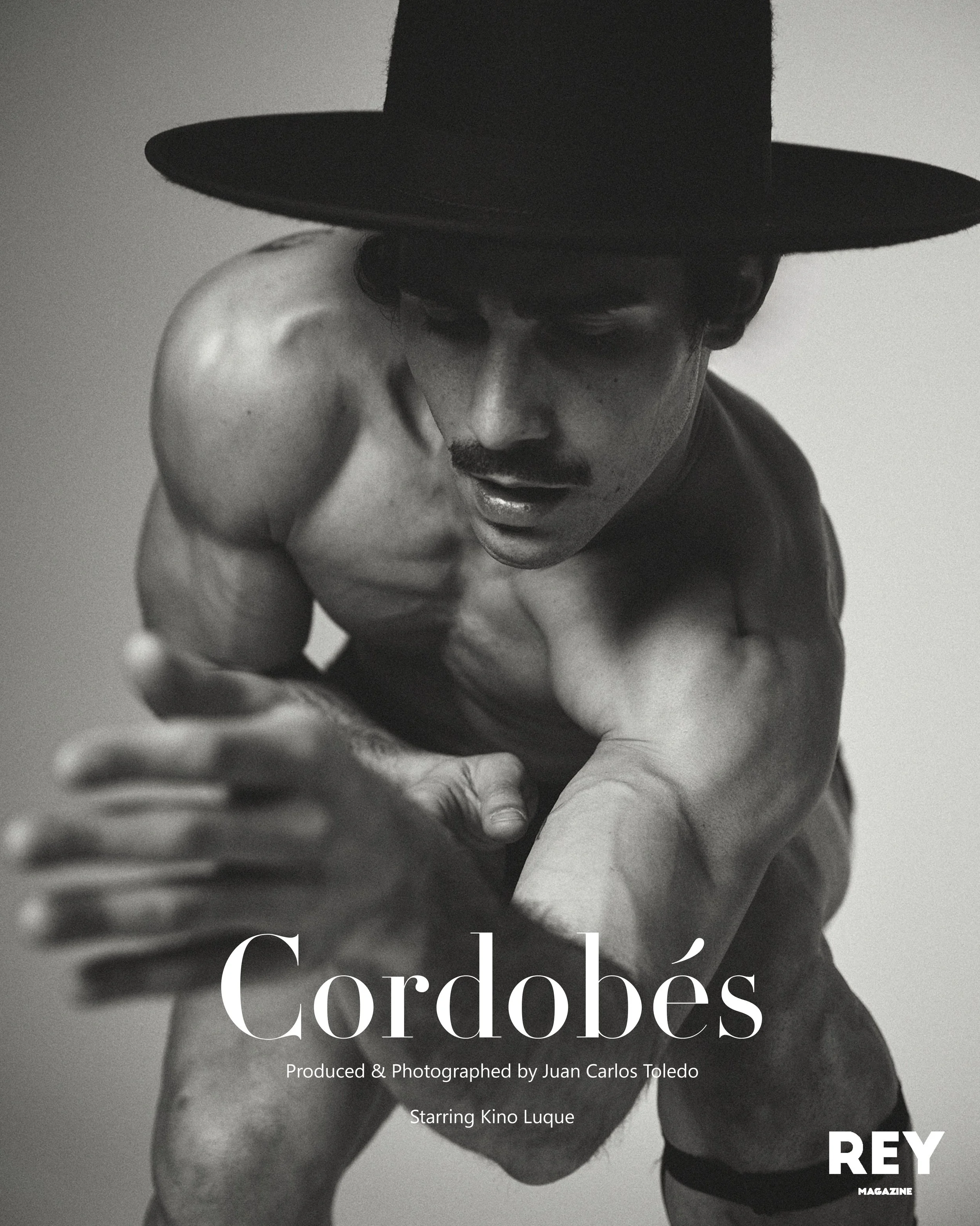
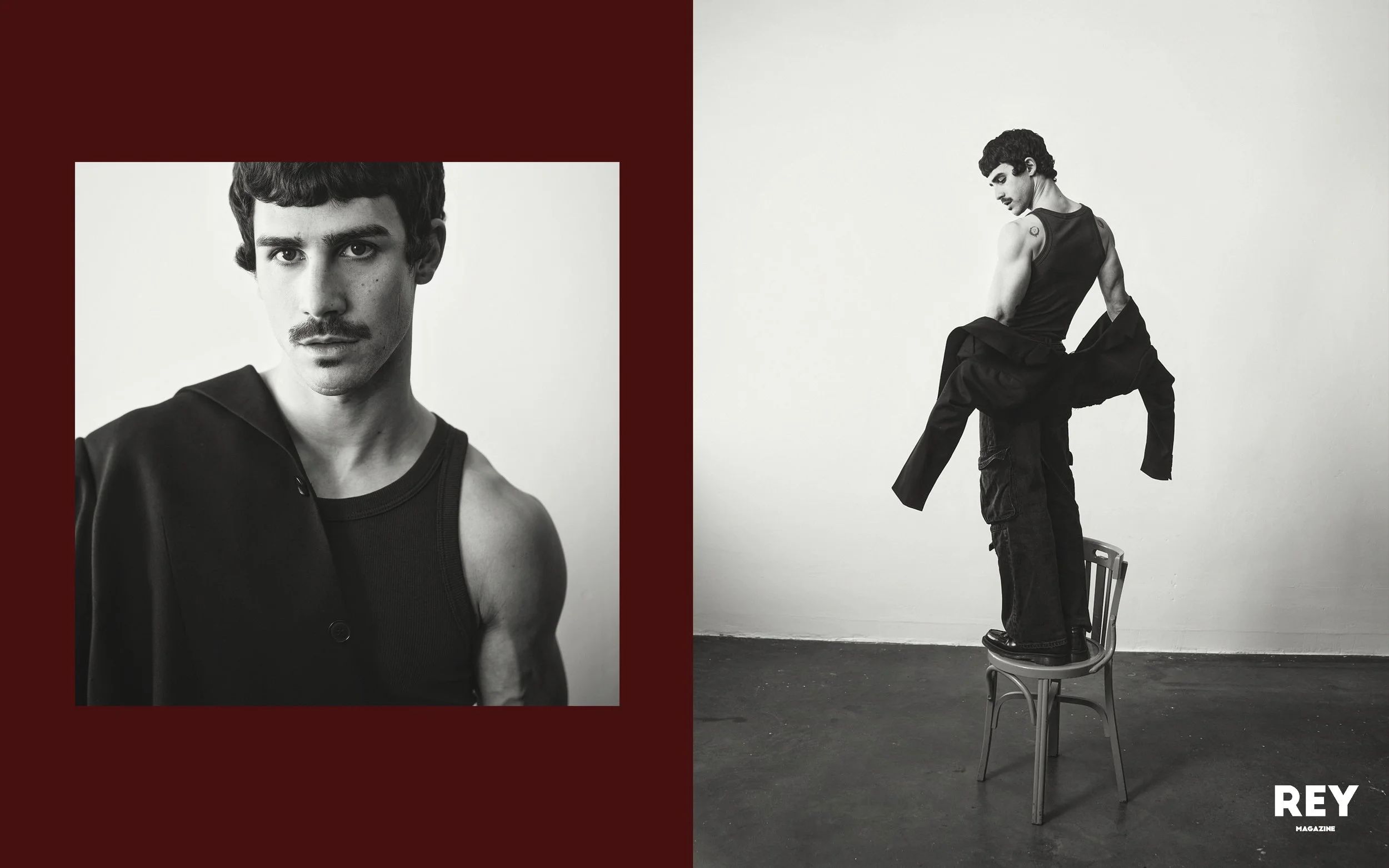
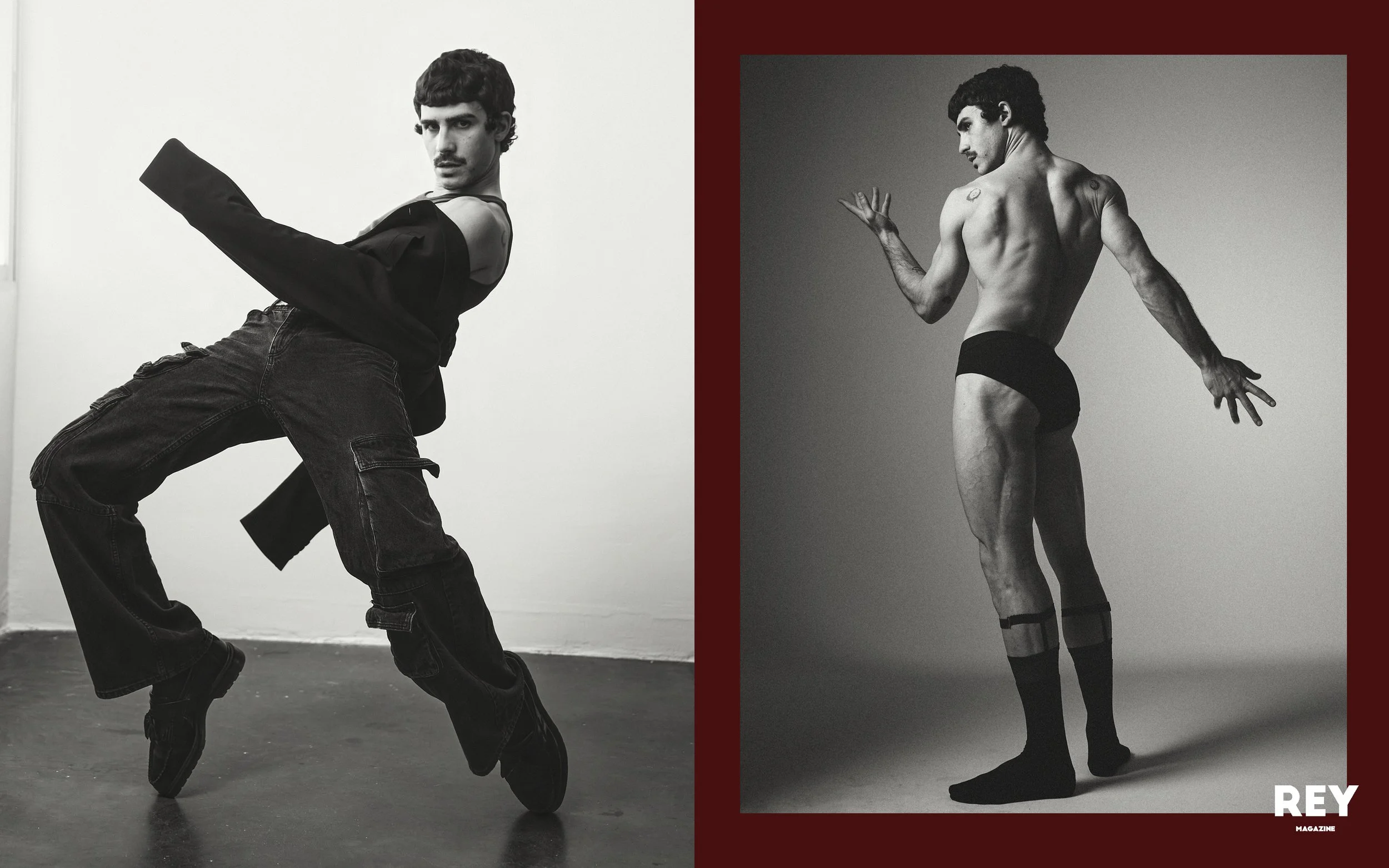
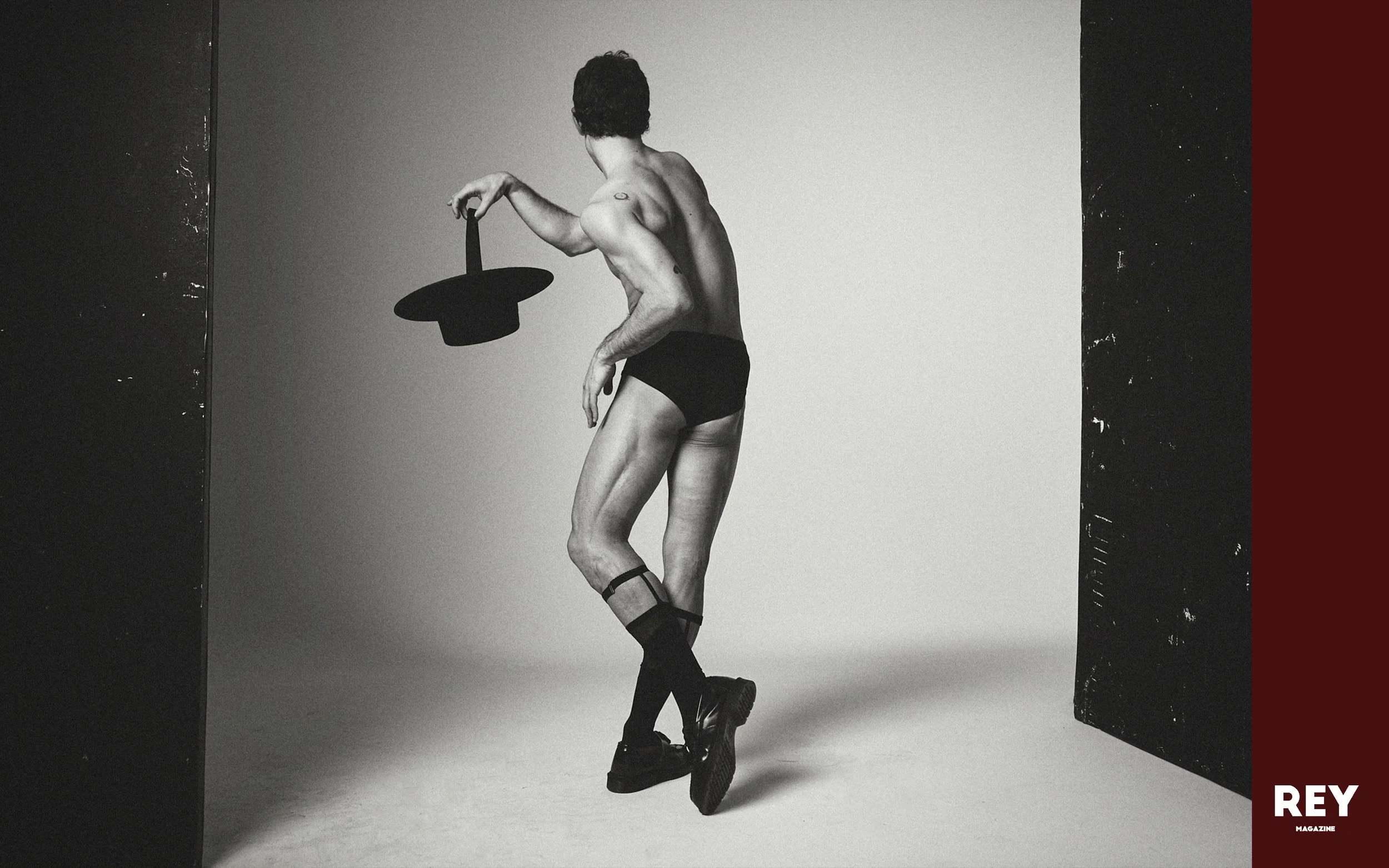
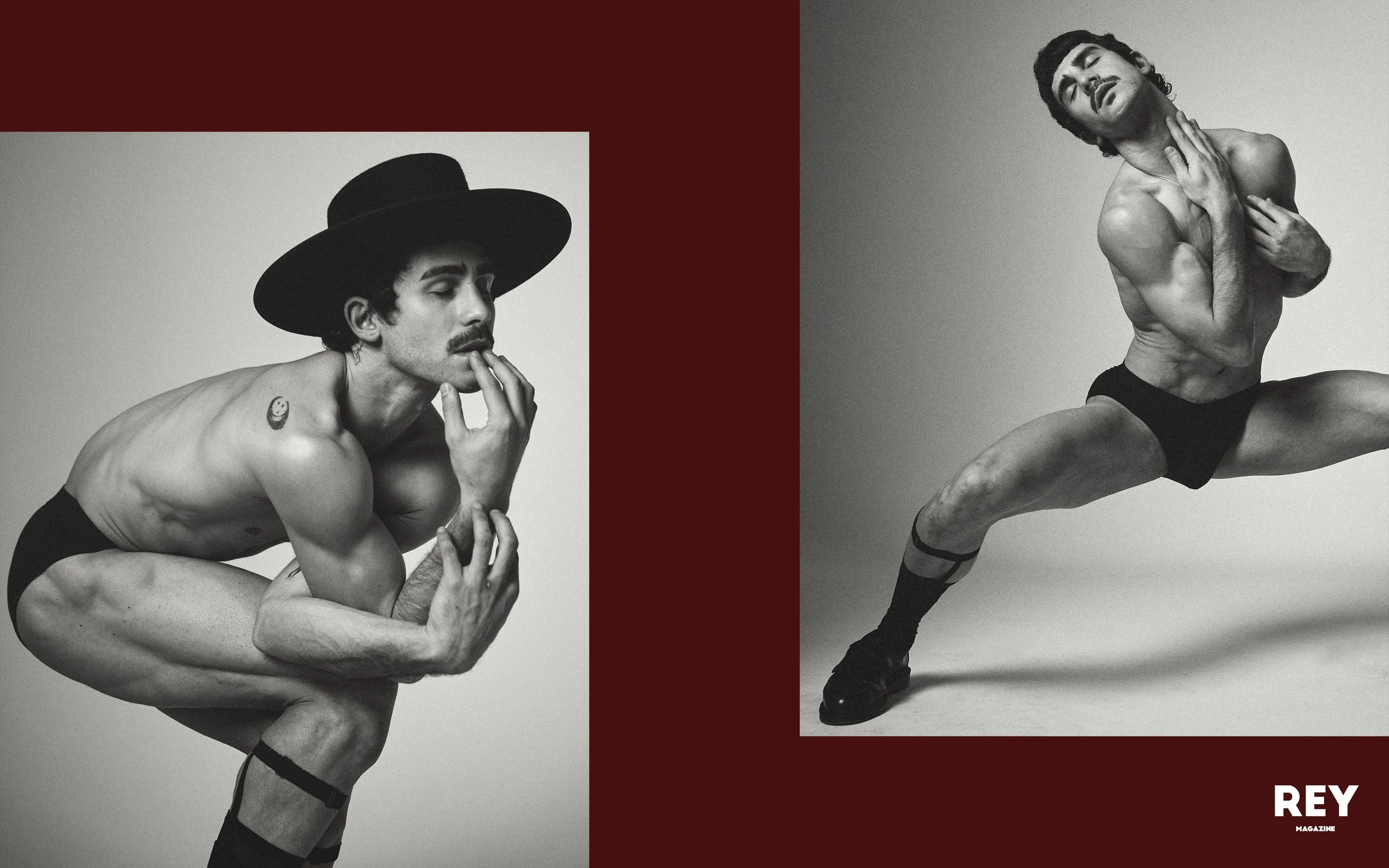
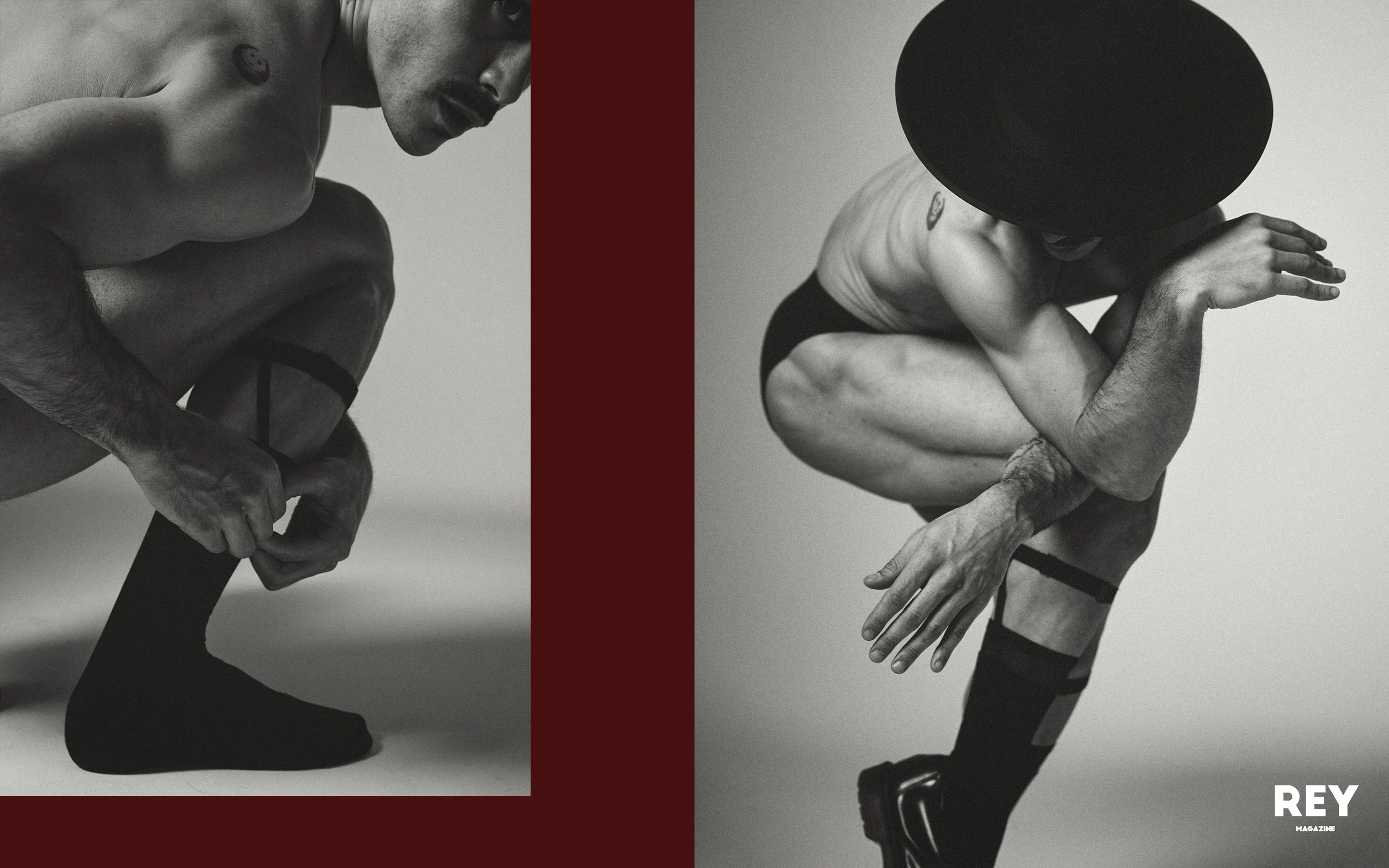
Cordobés

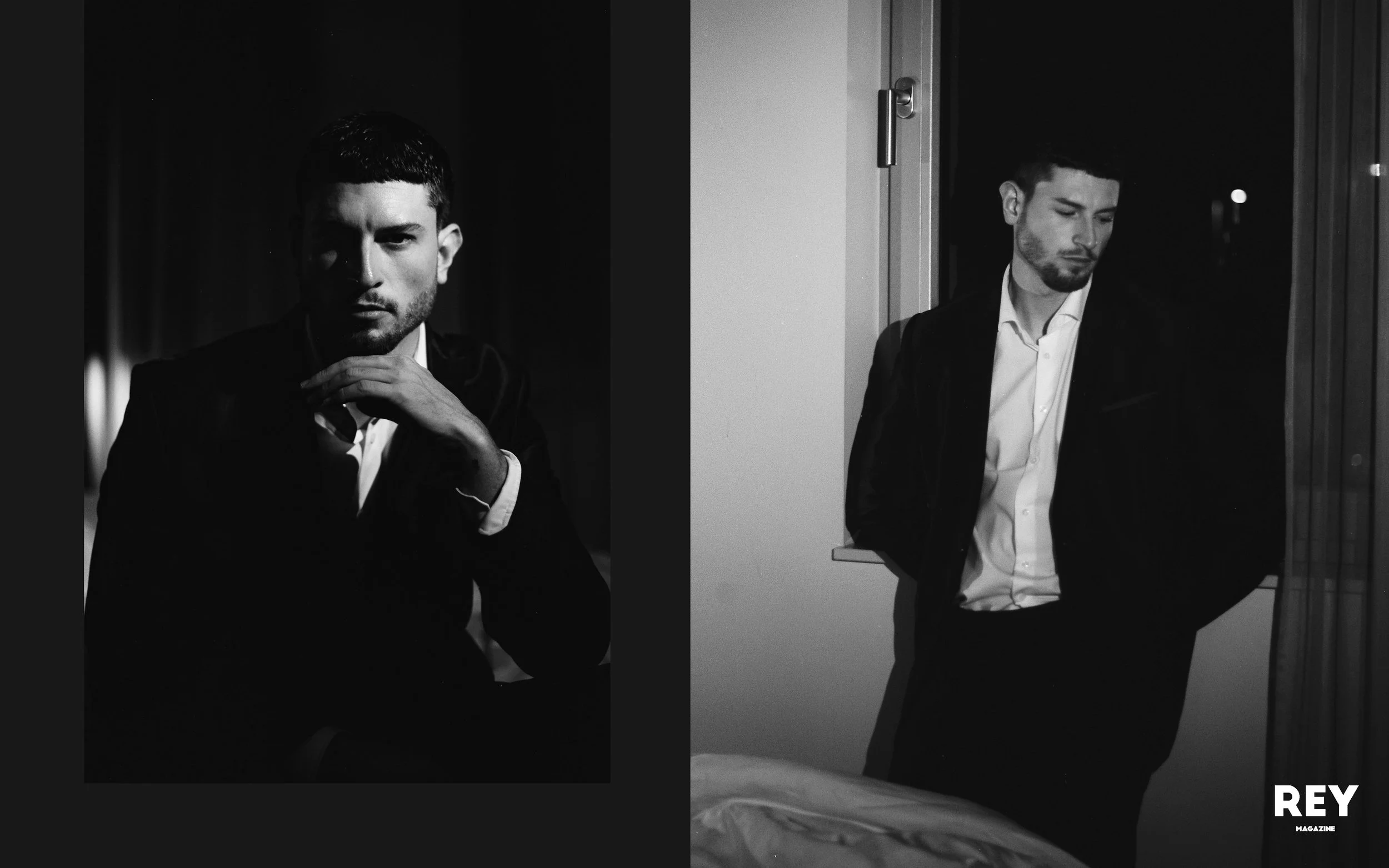
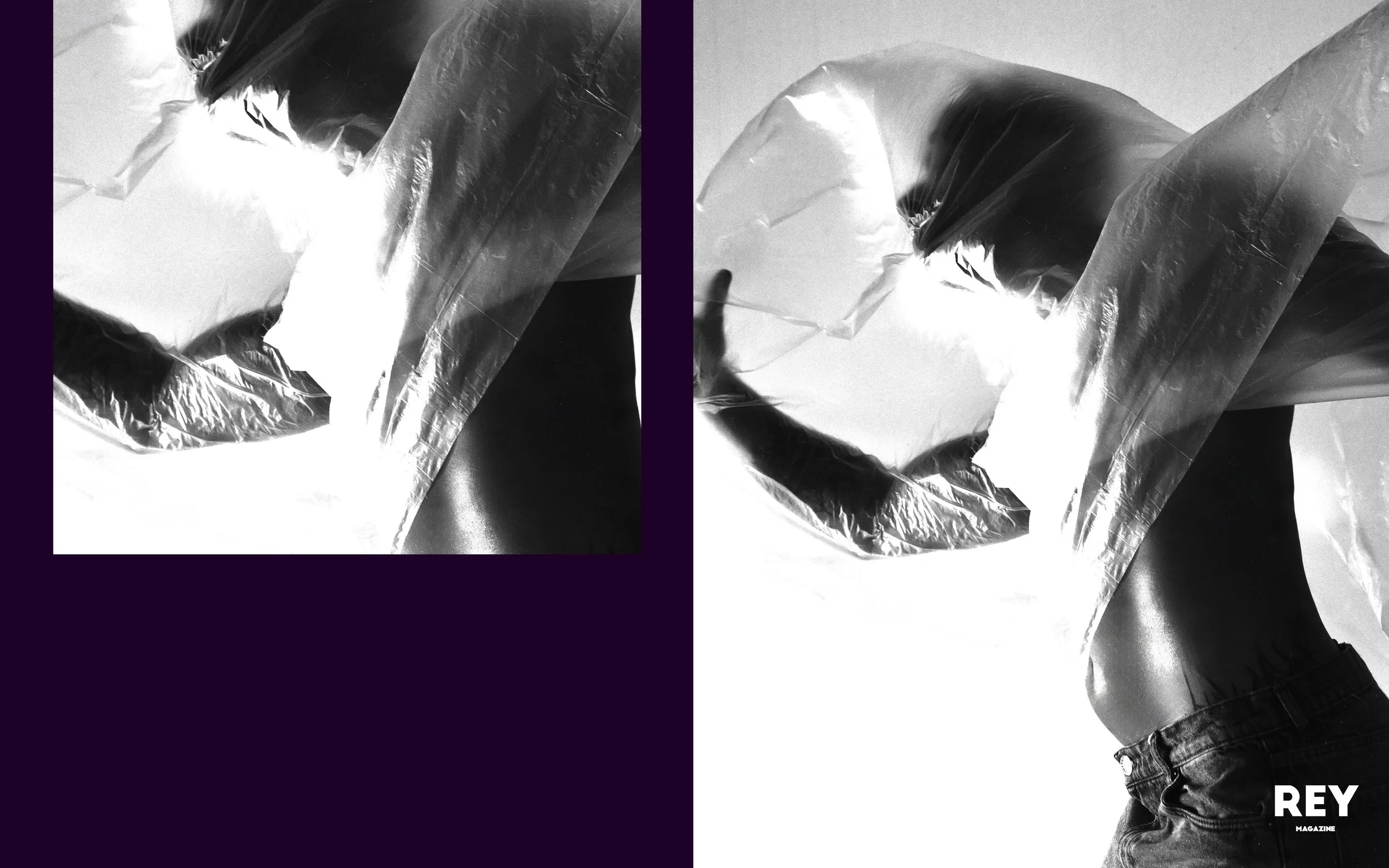
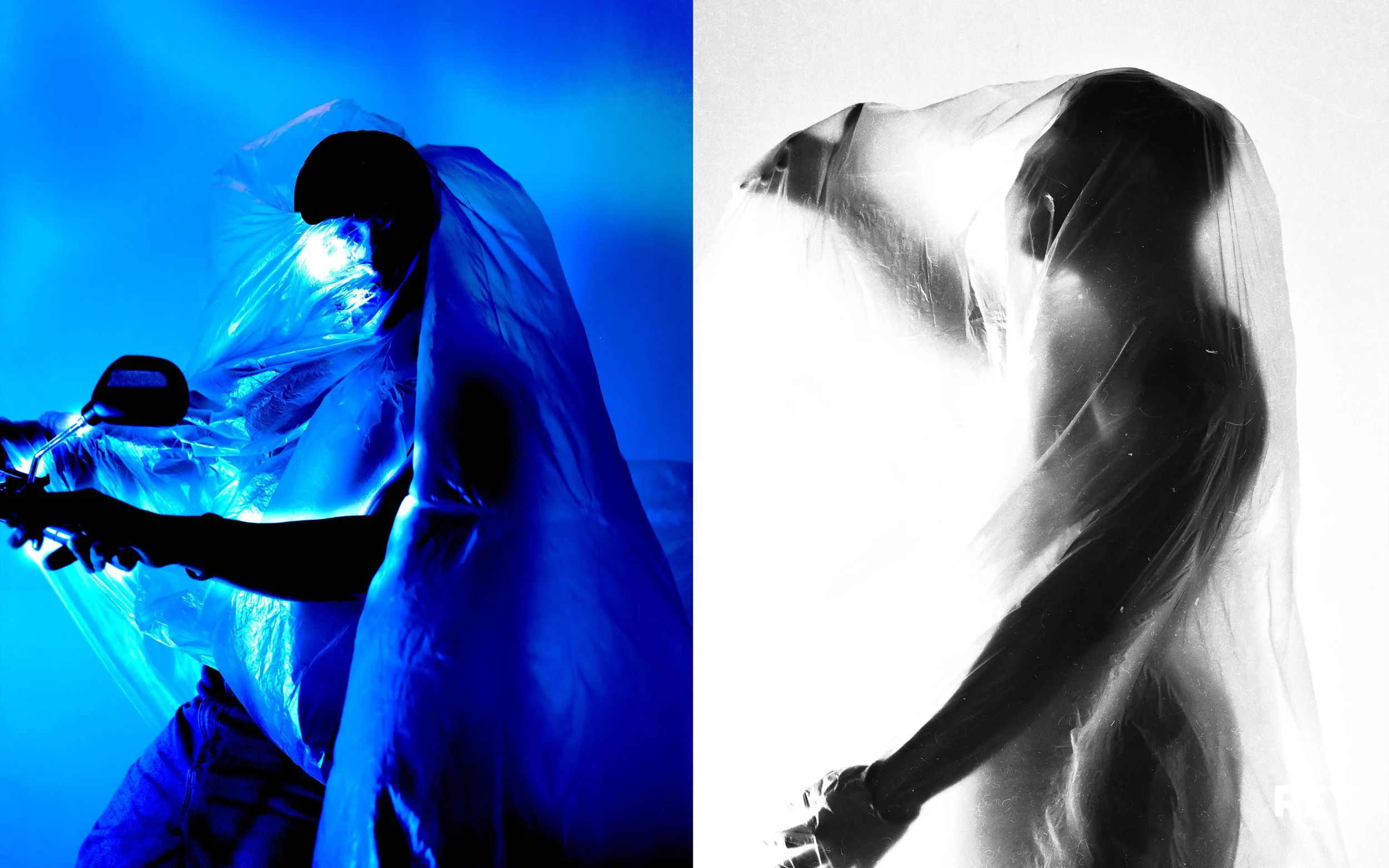
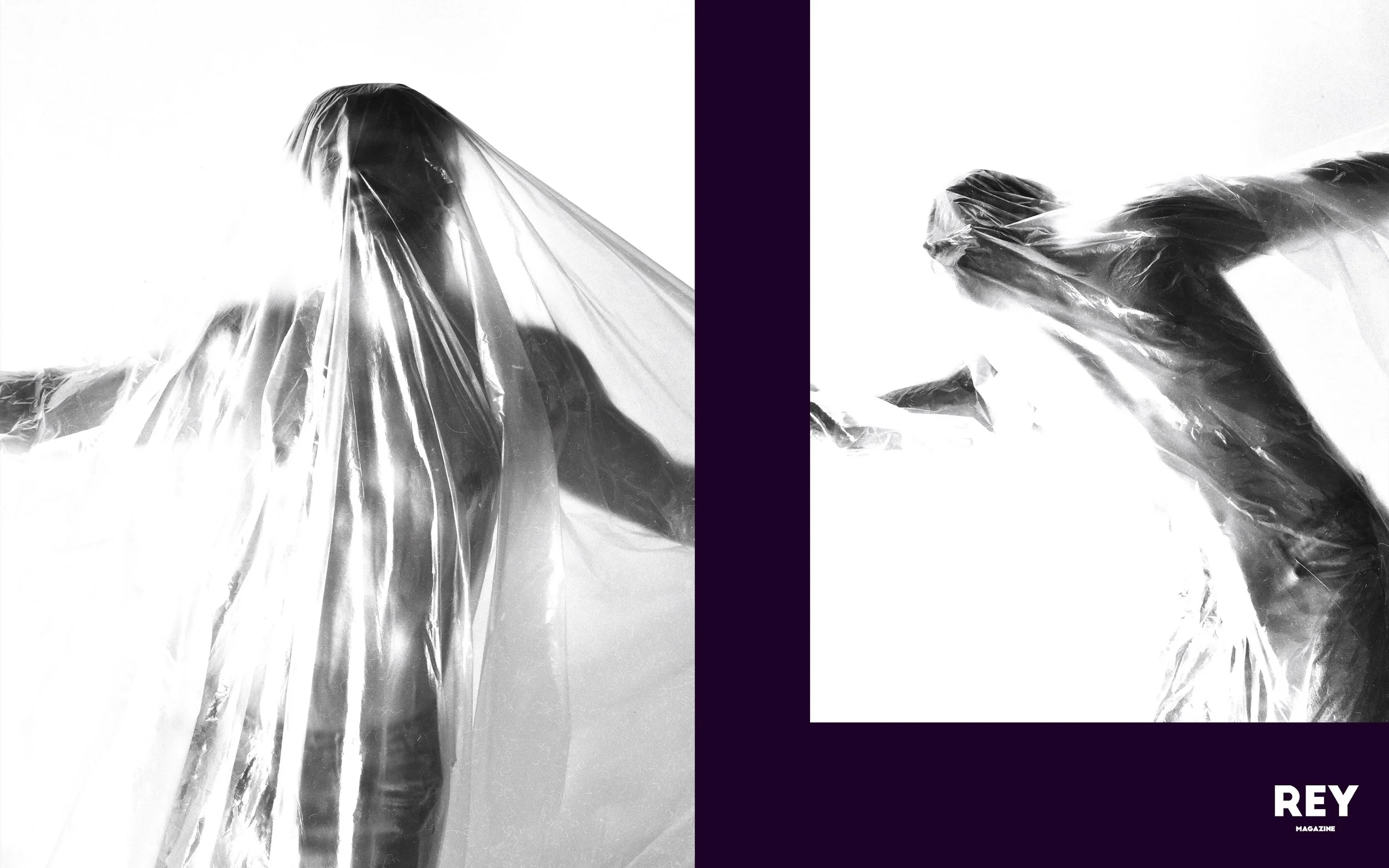
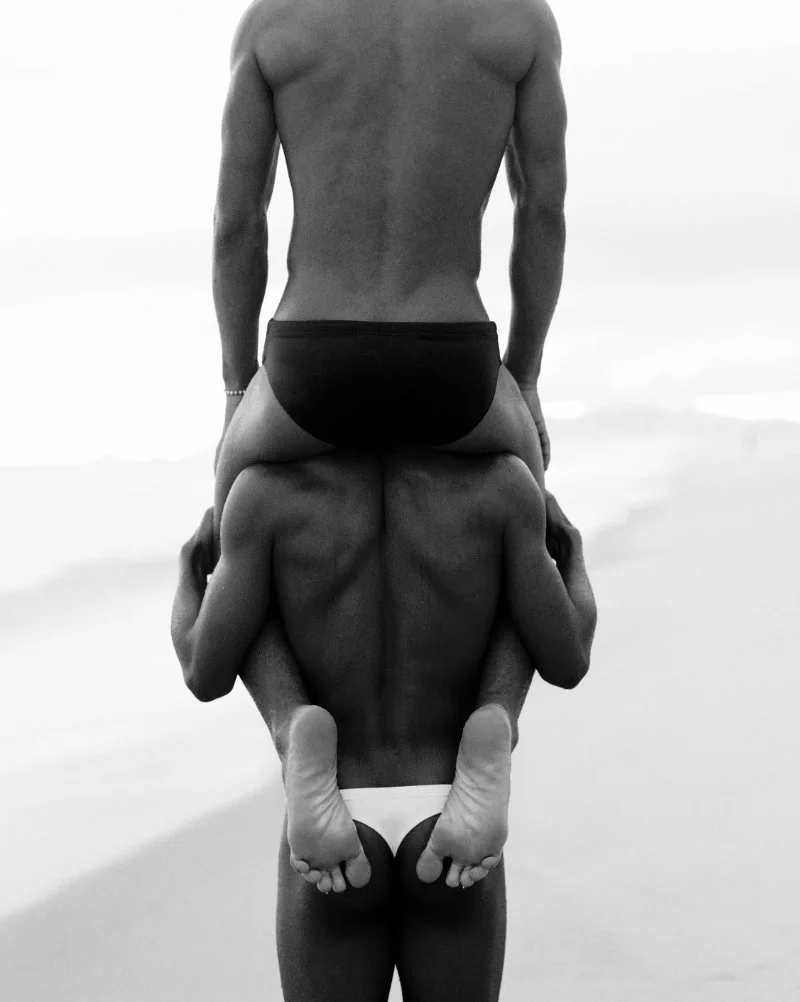
A REY Exclusive Fashion Editorial produced in Madrid, Spain.

Produced and Photographed by Juan Carlos Toledo

Starring Dancer Kino Luque

Location is Juanito Estudio

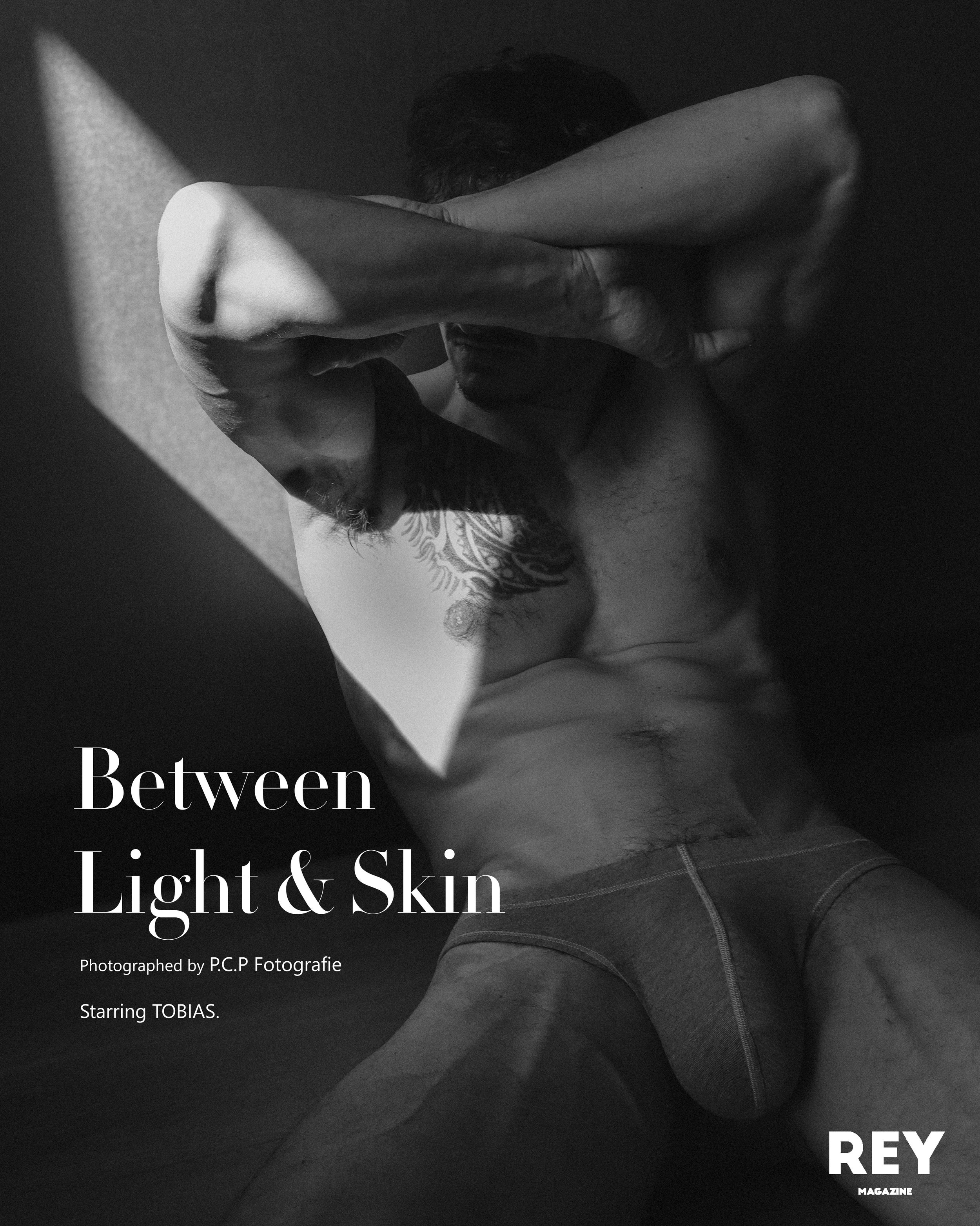
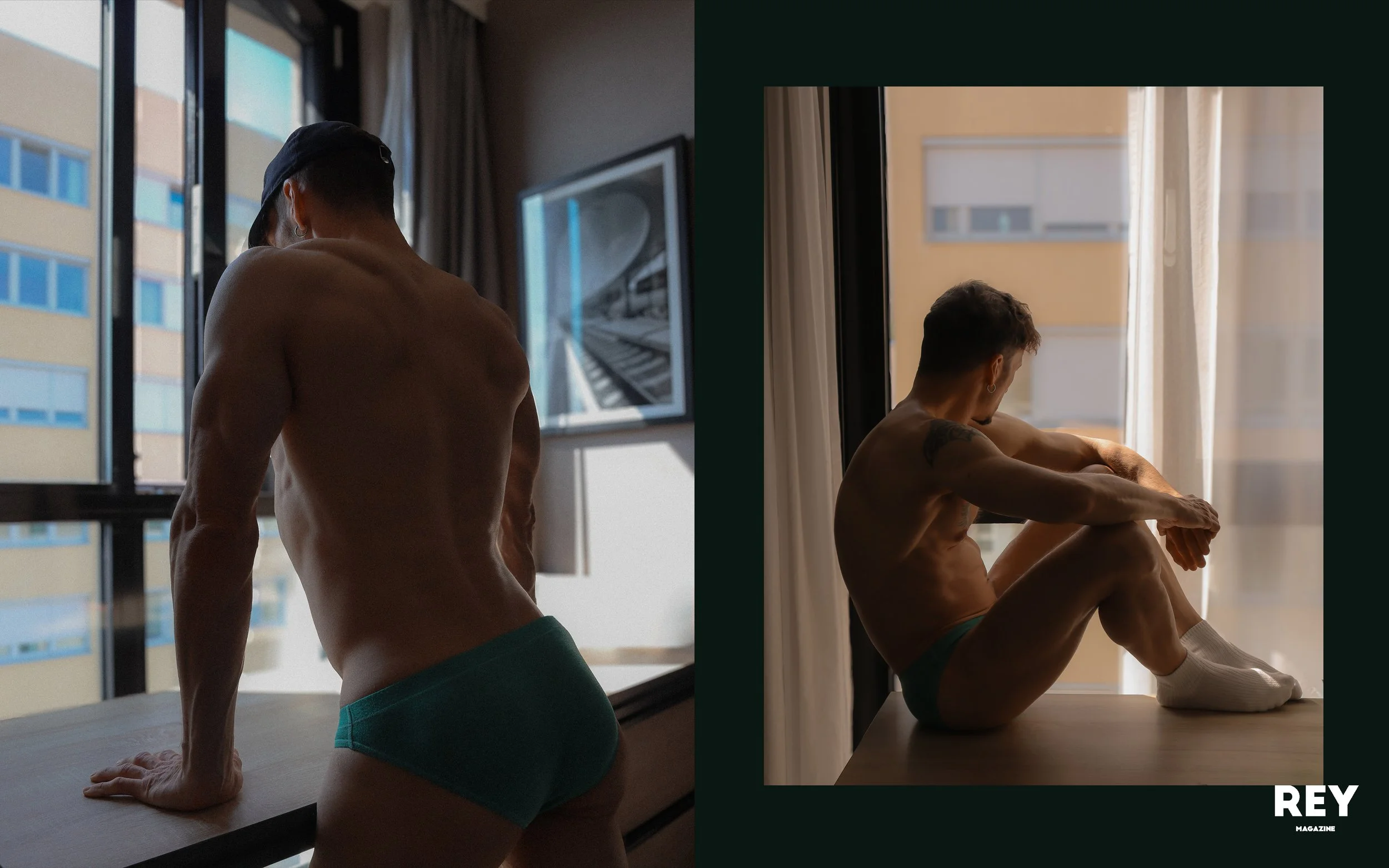
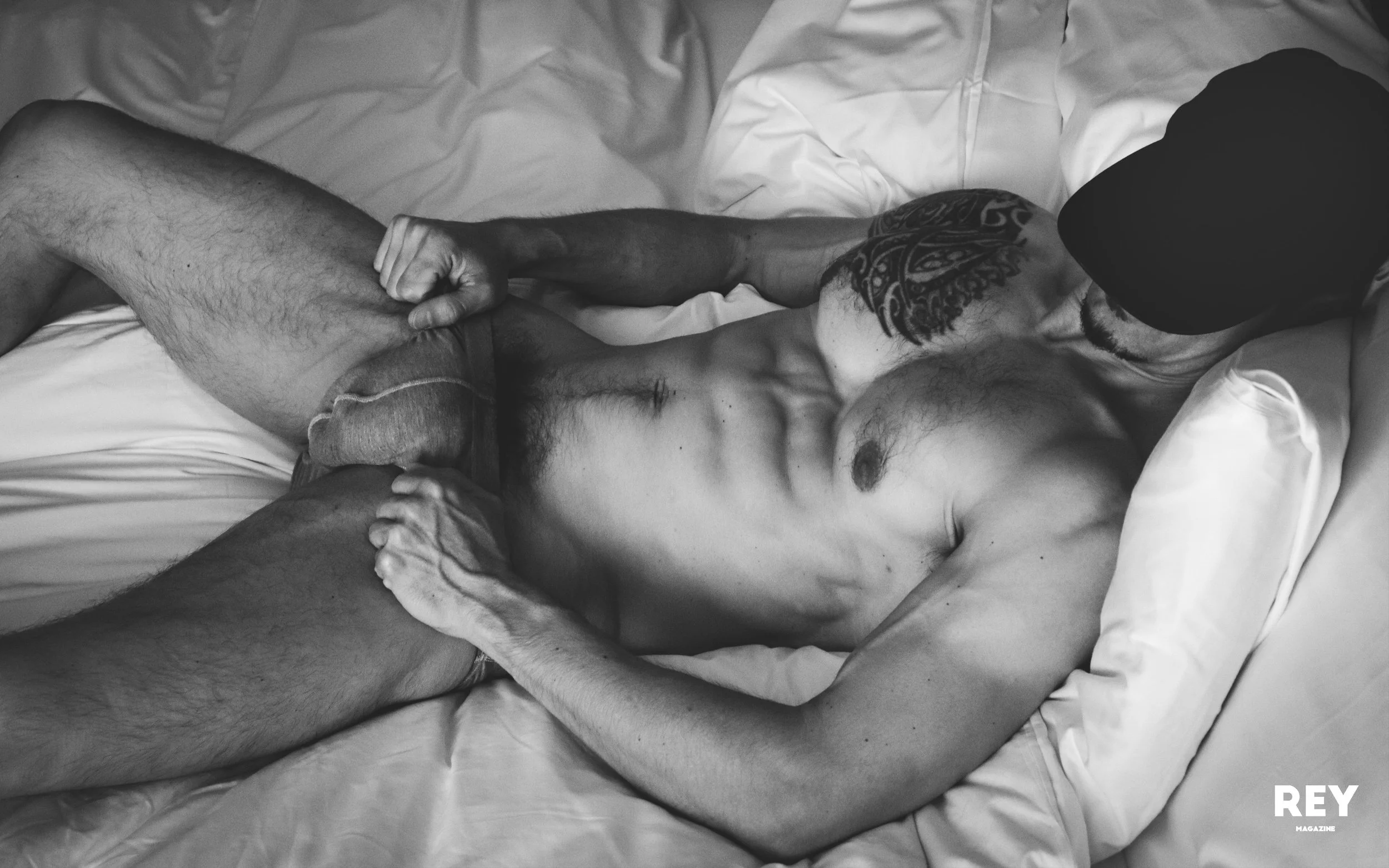
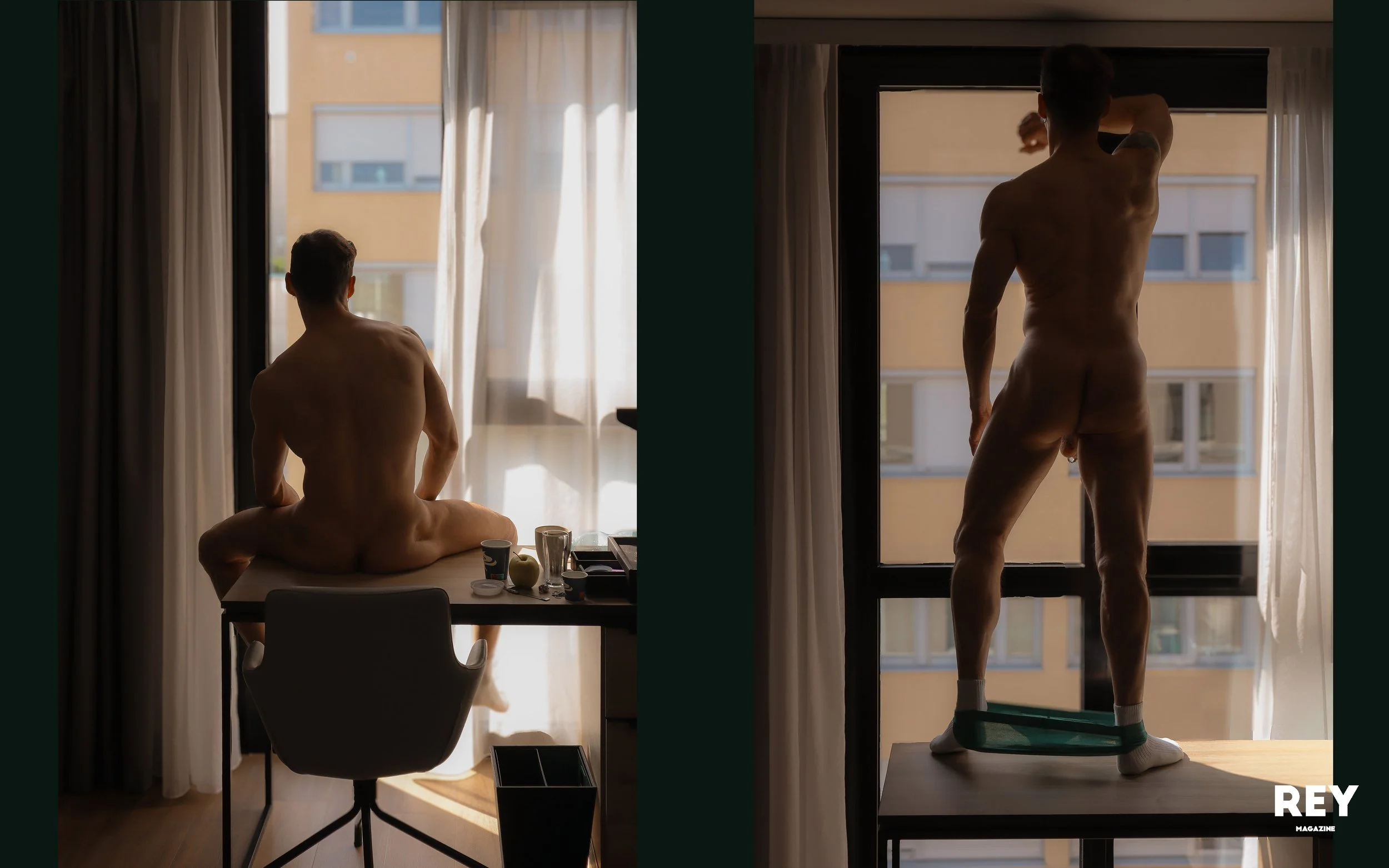
Between Light & Skin

A REY Exclusive Editorial, photographed in Graz, Austria.

Photographed by P.C.P Fotografie

Starring Tobias.

Phillip notes:

"Between Light and Skin" is a visual exploration of intimacy, silence, and the relationship between body and space.

Set in the soft natural light of a quiet interior, this series reflects vulnerability, strength, and the beauty of unguarded presence.

The human body becomes both subject and architecture — shaped by shadow, framed by windows, and suspended between exposure and privacy.

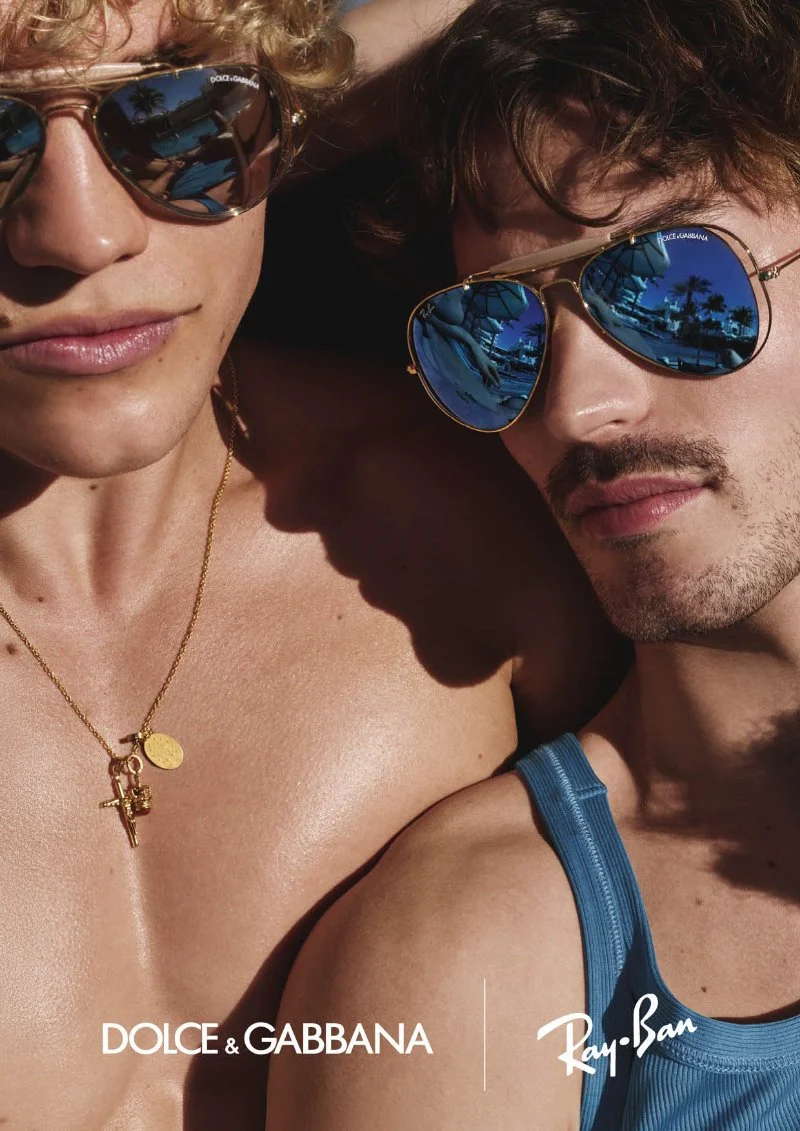
Dolce & Gabbana and Ray-Ban reimagine the Aviator

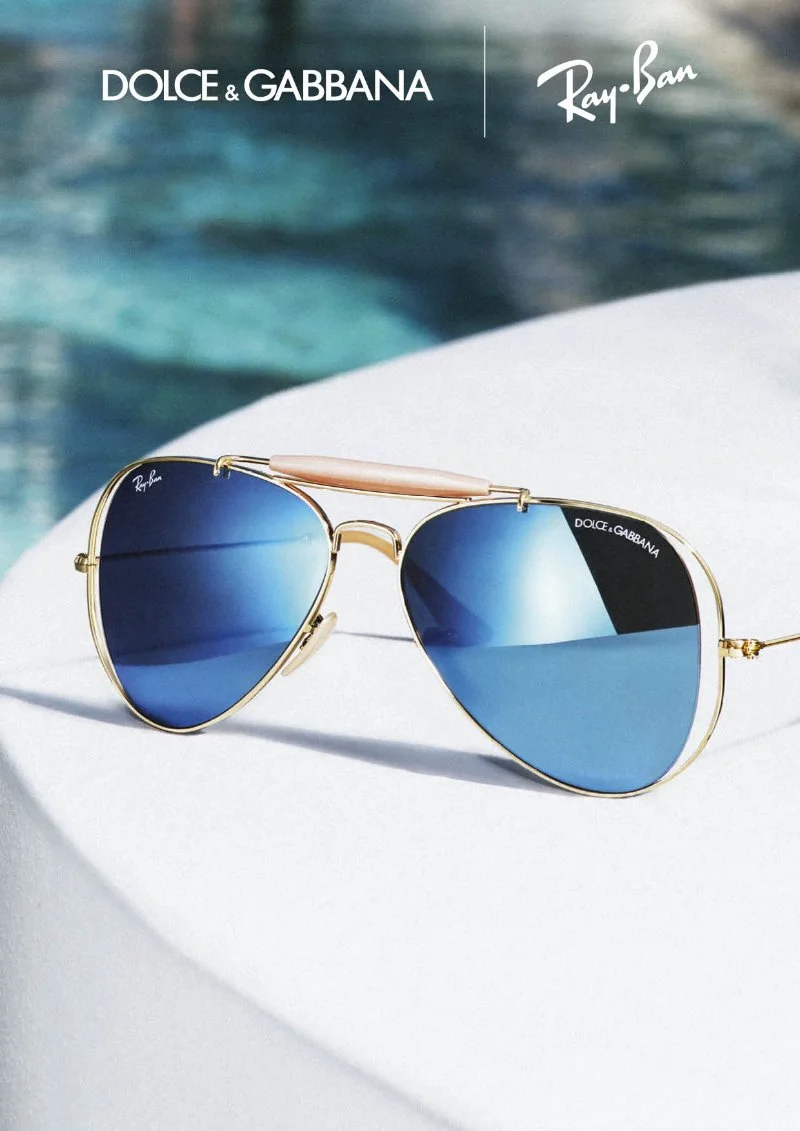
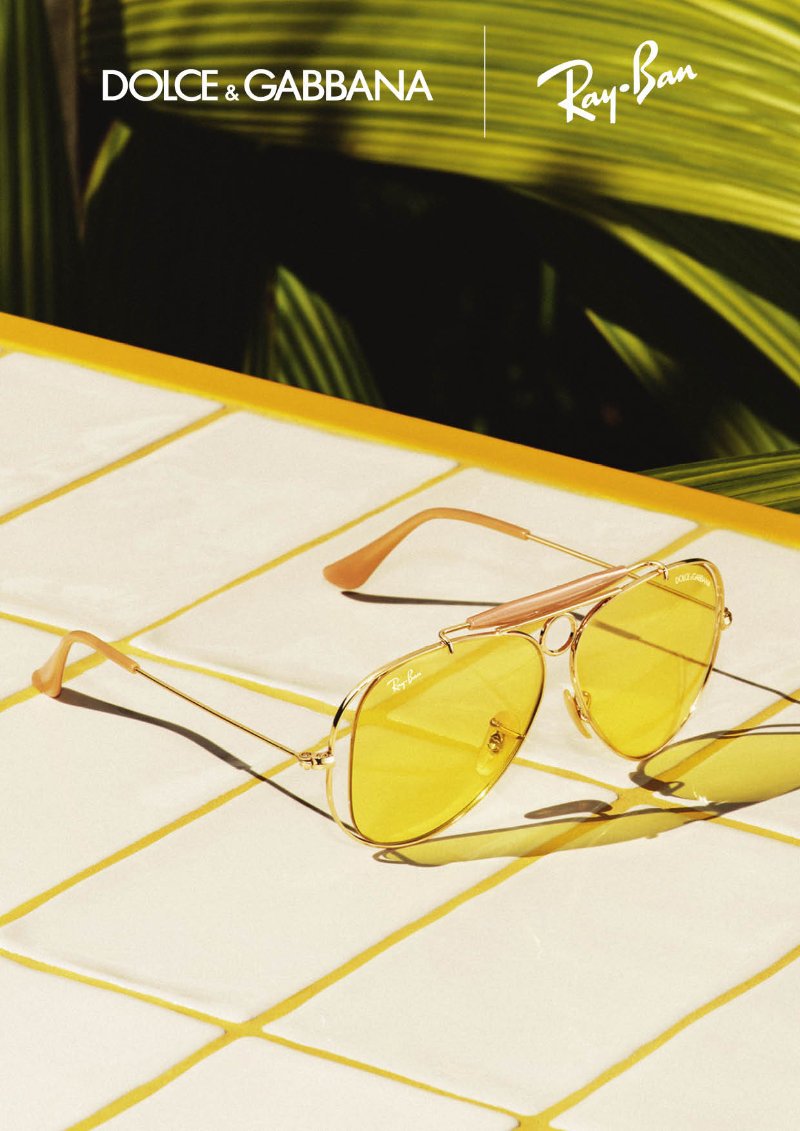
Dolce & Gabbana and Ray-Ban unite for a collaboration that revisits one of eyewear’s most iconic silhouettes. Ahead of Ray-Ban’s 90th anniversary, Domenico Dolce and Stefano Gabbana reinterpret the Aviator through two distinct models: Shooter and Outdoorsman II.

The Shooter draws directly from archival references, defined by a bold structure, a mother-of-pearl top bar, and an integrated cigarette holder—details that evoke a refined, vintage sensibility. Teardrop lenses appear in a spectrum of tones, from orange and pink to green, blue, and yellow, offered in both mirrored and clear finishes. A slim metal frame preserves the classic pilot shape while introducing a subtle rimless effect.

In contrast, the Outdoorsman II adopts a more understated approach. Its pronounced top bar adds a graphic edge, while the lightweight frame plays with negative space to enhance the silhouette. The lenses, available in muted shades including blue, dusty rose, beige, brown, and green, maintain the same mirrored and clear variations.
Both designs feature dual branding applied with precision and are accompanied by an exclusive leather case with a gold-tone strap and clasp, designed to function as an accessory—attachable to a handbag or belt.

The campaign, captured by Gray Sorrenti, presents the collection through a contemporary, fashion-driven lens.

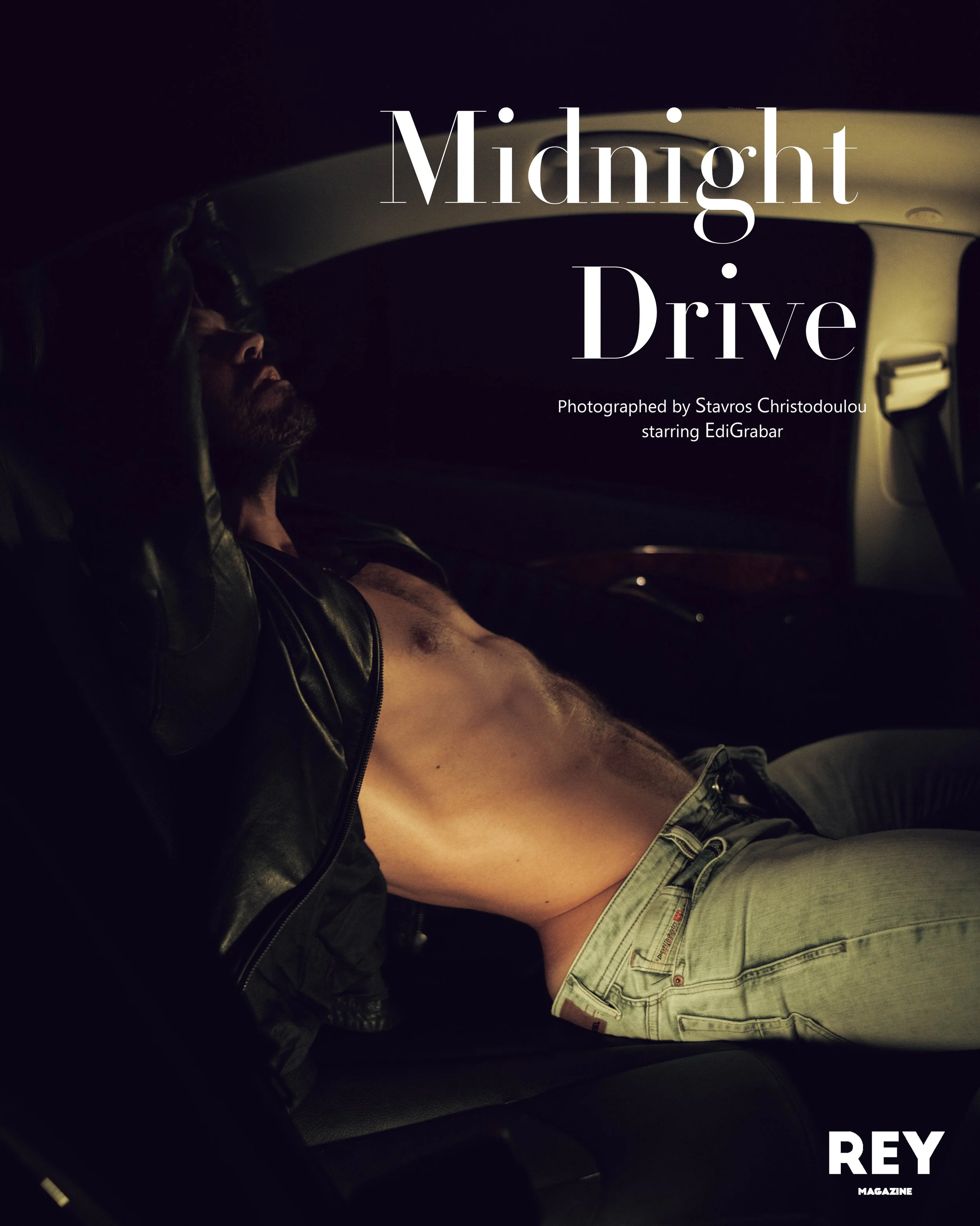
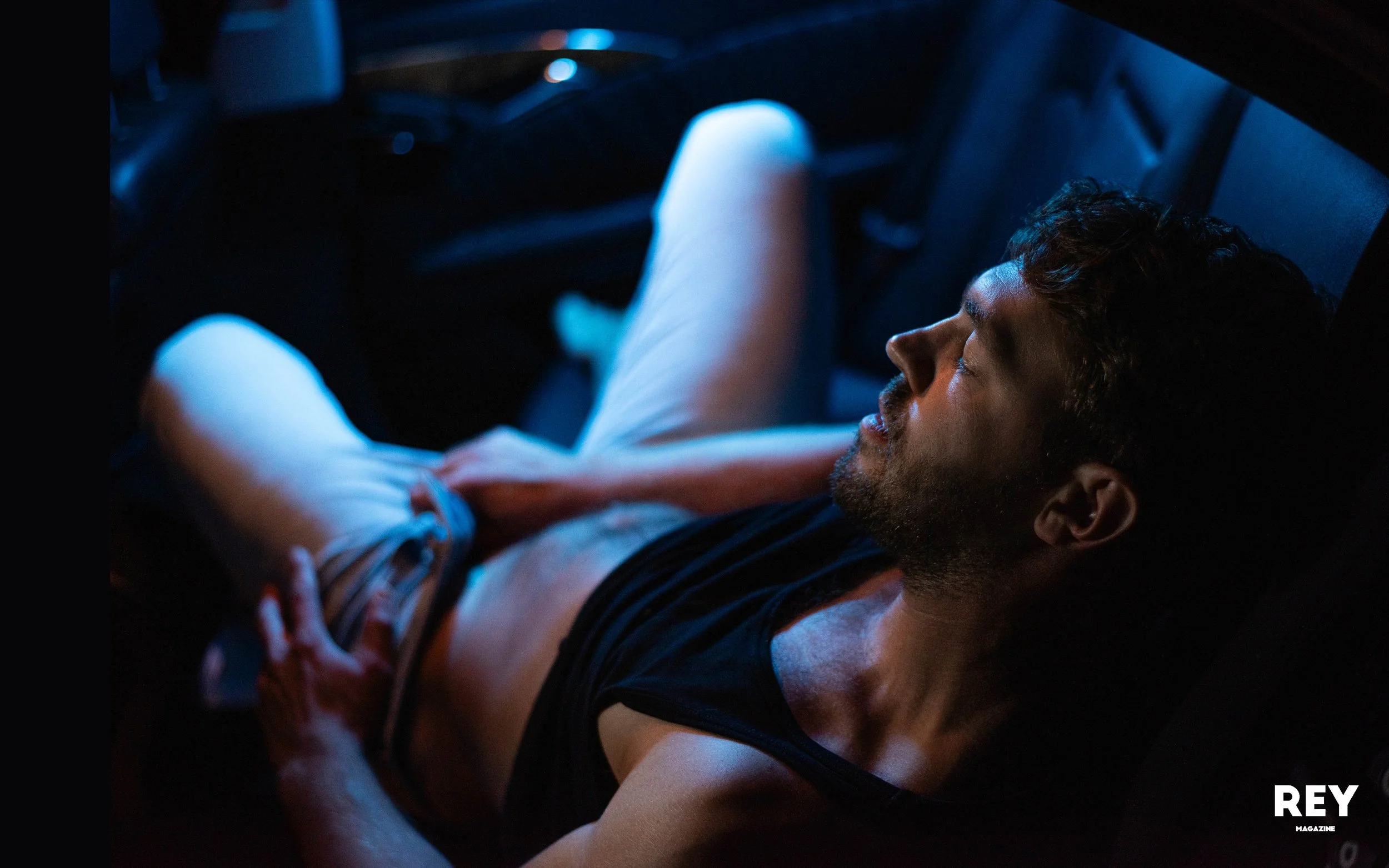
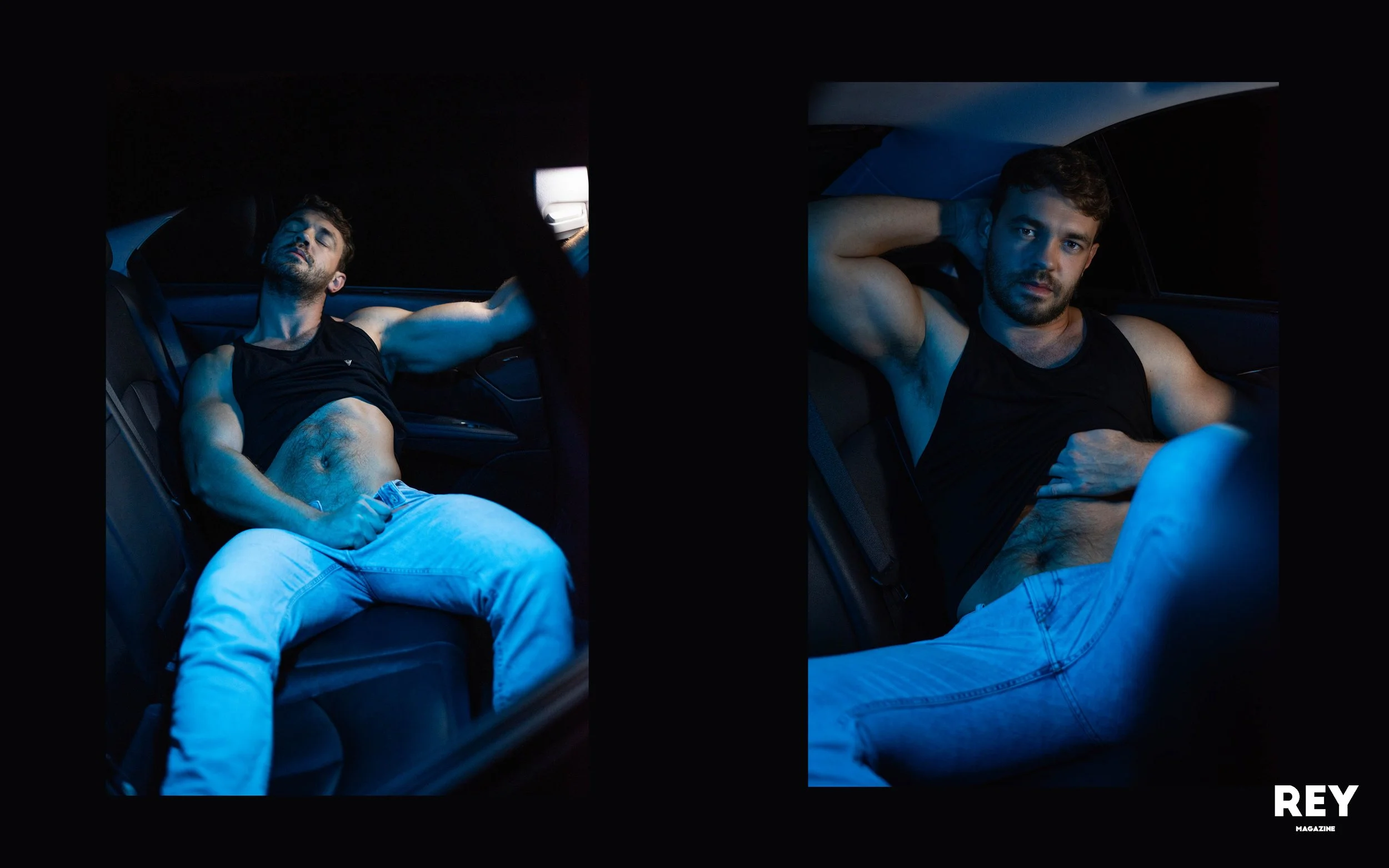
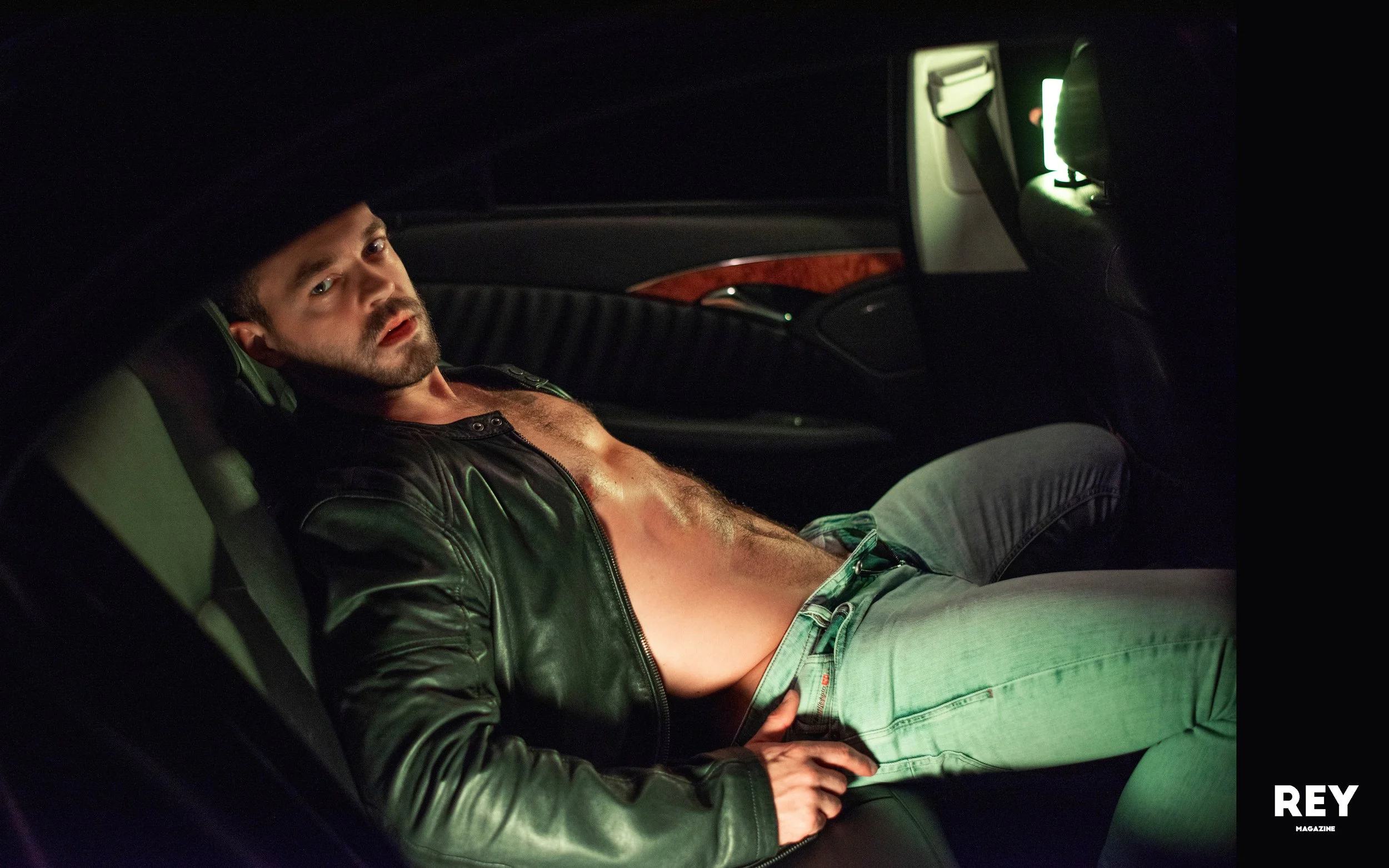
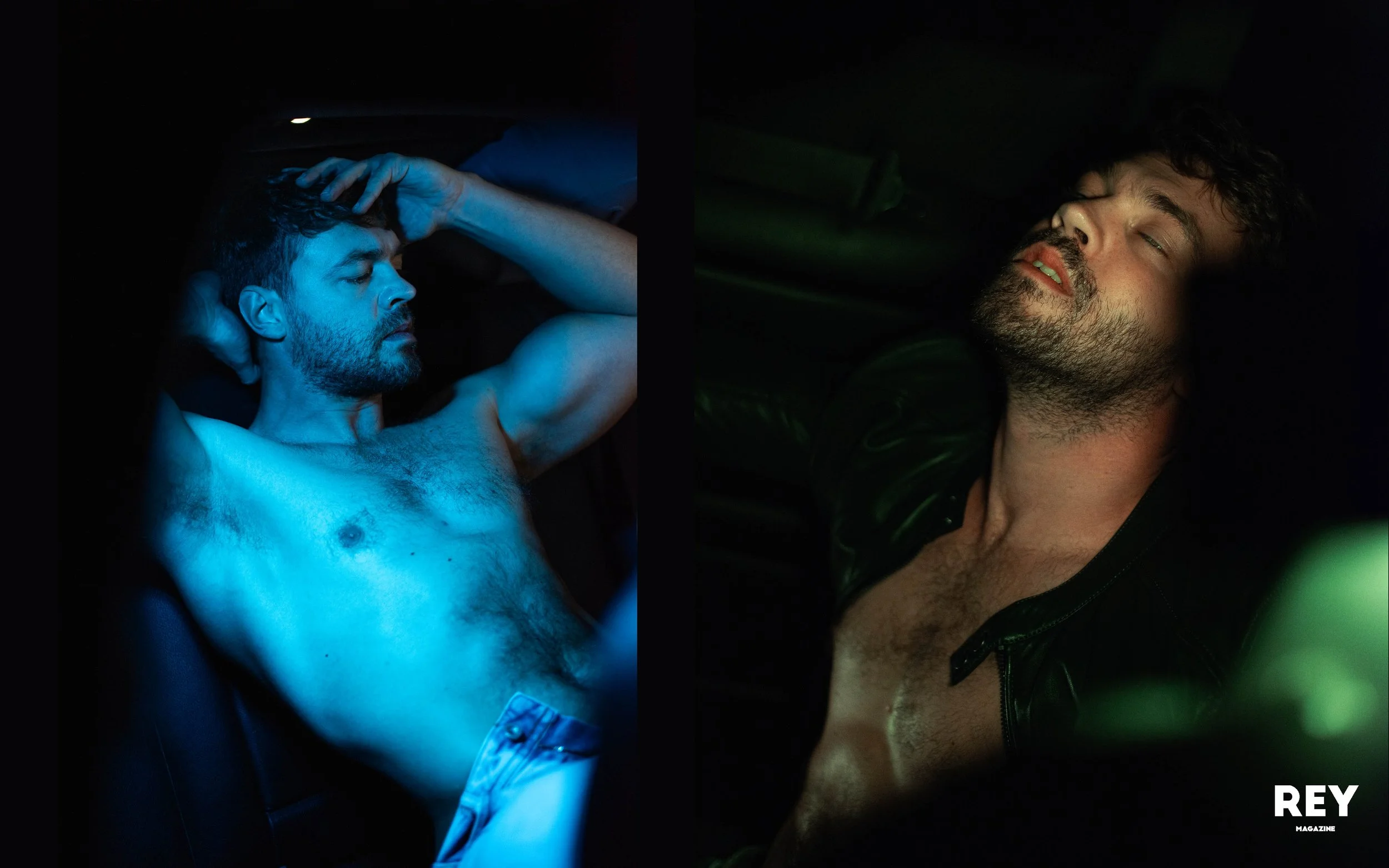
Midnight Drive

A REY Exclusive Editorial, photographed in Nicosia, Cyprus.

Photographed by Stavros Christodoulou

starring EdiGrabar

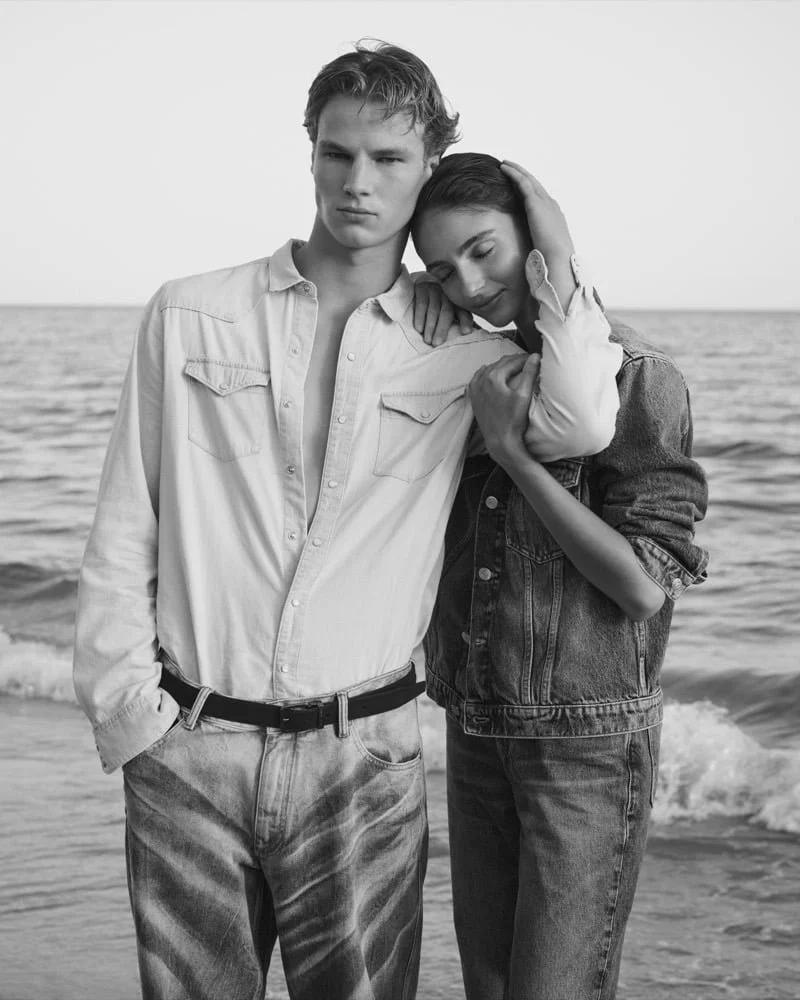
Emporio Armani Revisits the Armani Jeans Archive with New Capsule Collection

Emporio Armani turns to its past to redefine denim for the present, revisiting the legacy of Armani Jeans through a focused new capsule collection.

Originally launched in 1981, Armani Jeans captured the spirit of premium denim at a time when fashion, celebrity, and aspiration were tightly intertwined. The line became synonymous with elevated everyday wear—jeans that didn’t just fit well, but photographed effortlessly, shaping the visual identity of luxury denim for an entire generation.

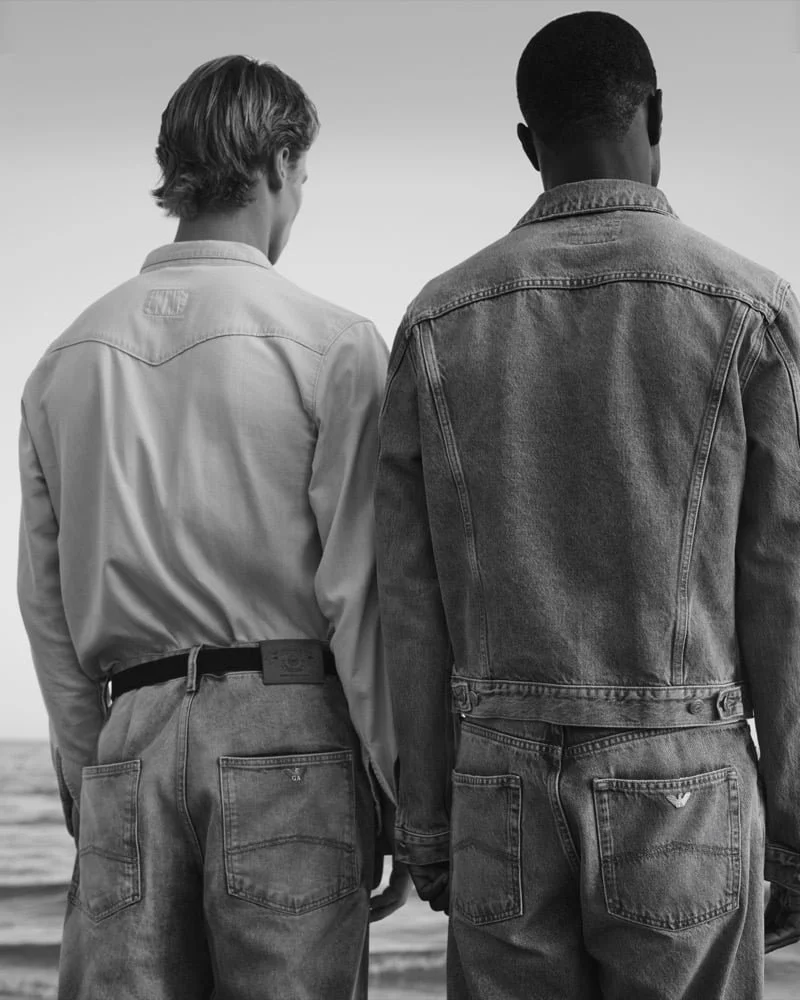
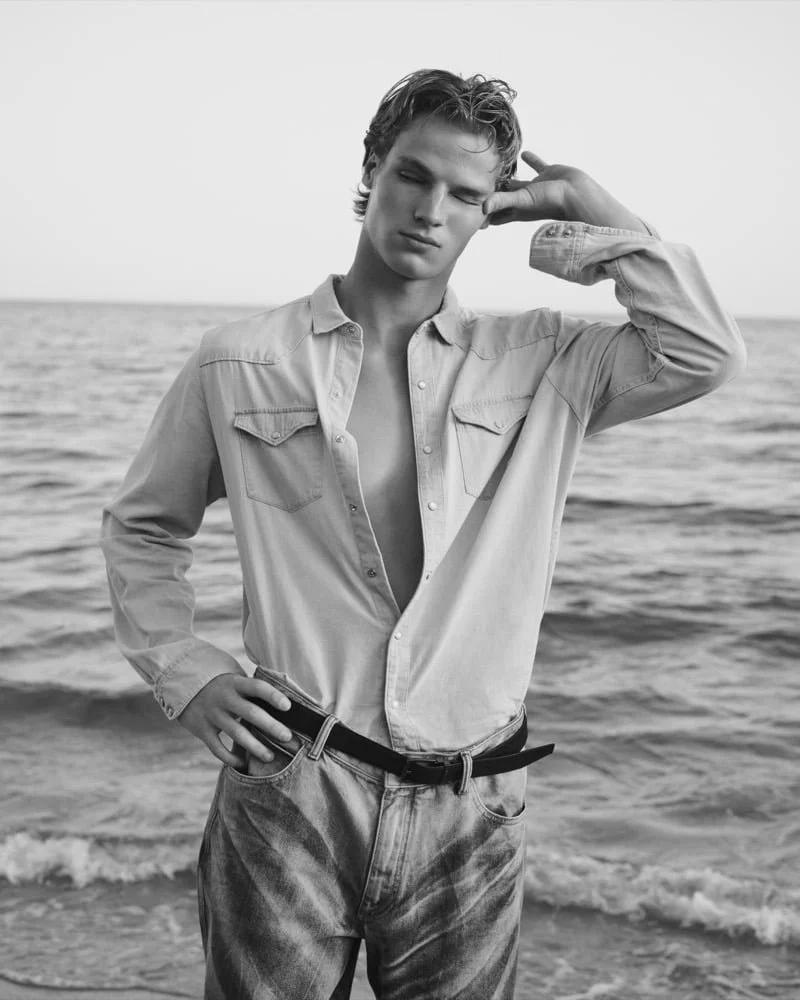
Today, that legacy is reinterpreted with a contemporary lens. At the center of the capsule are cloud-wash wide-leg jeans, defined by a marbled acid treatment that gives depth to their relaxed silhouette. The aesthetic feels both archival and current—an intentional echo of the brand’s original DNA.

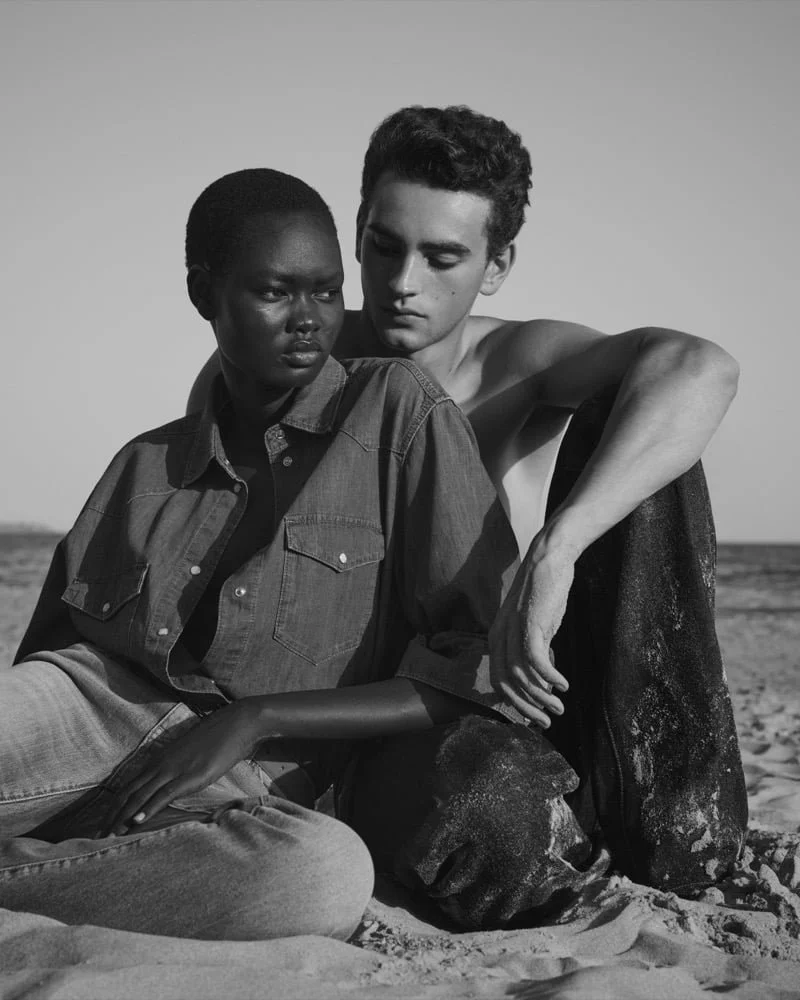
Fronting the campaign, Henry Rank embodies this balance of nostalgia and modernity. Styled in a light-wash denim western shirt worn open and paired with a leather belt, the look reflects a confident, undone approach to classic denim dressing.

Elsewhere, the collection leans into subtle archival cues. A mid-wash trucker jacket and dark straight-leg jeans round out the offering, while understated branding—like the signature eagle embroidered on the back pocket and the AJ logo stitched into the shirt’s back yoke—keeps the focus on form, texture, and legacy.

With this capsule, Emporio Armani doesn’t simply revisit the past—it refines it, distilling decades of denim history into a collection that feels quietly relevant now.

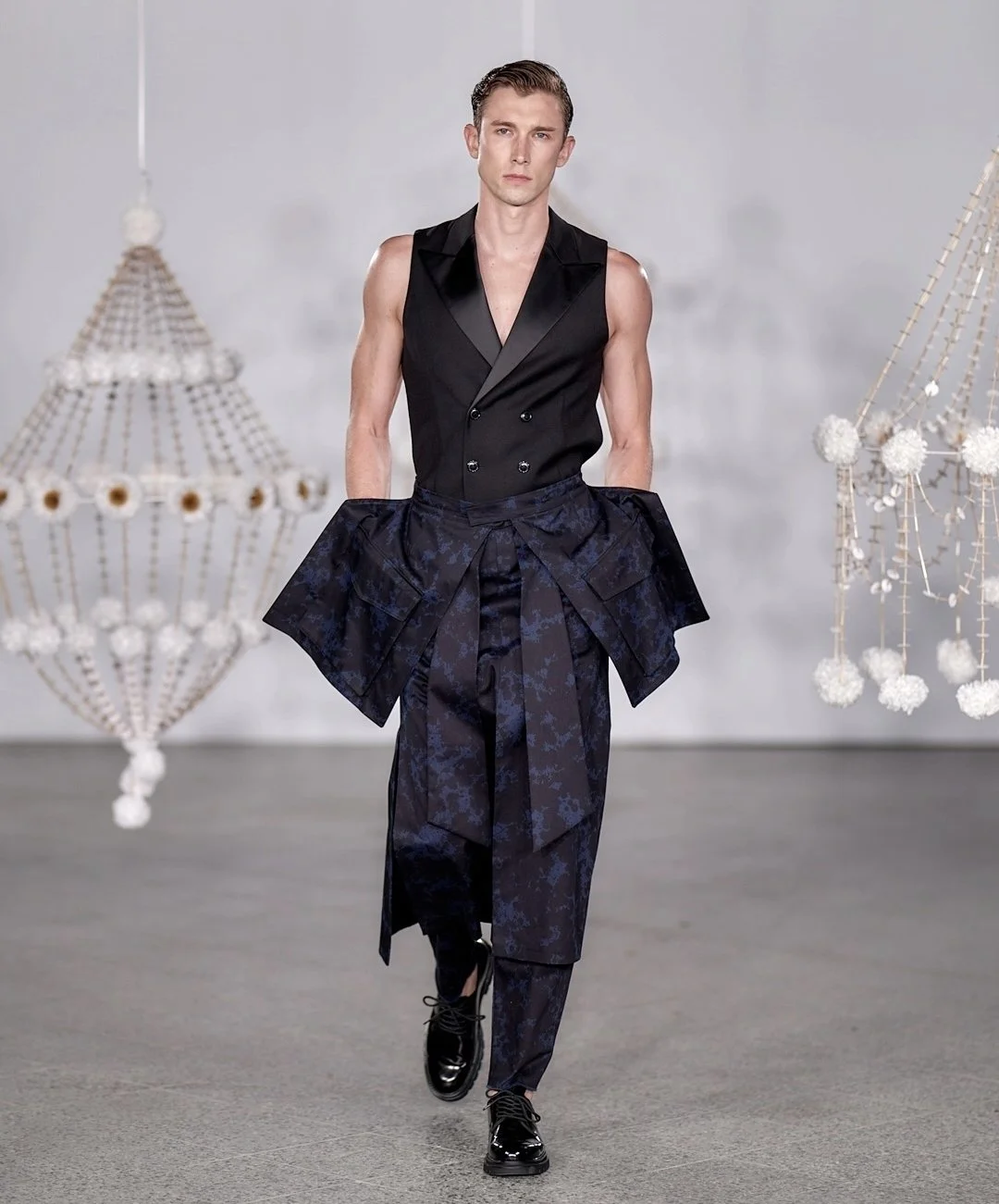
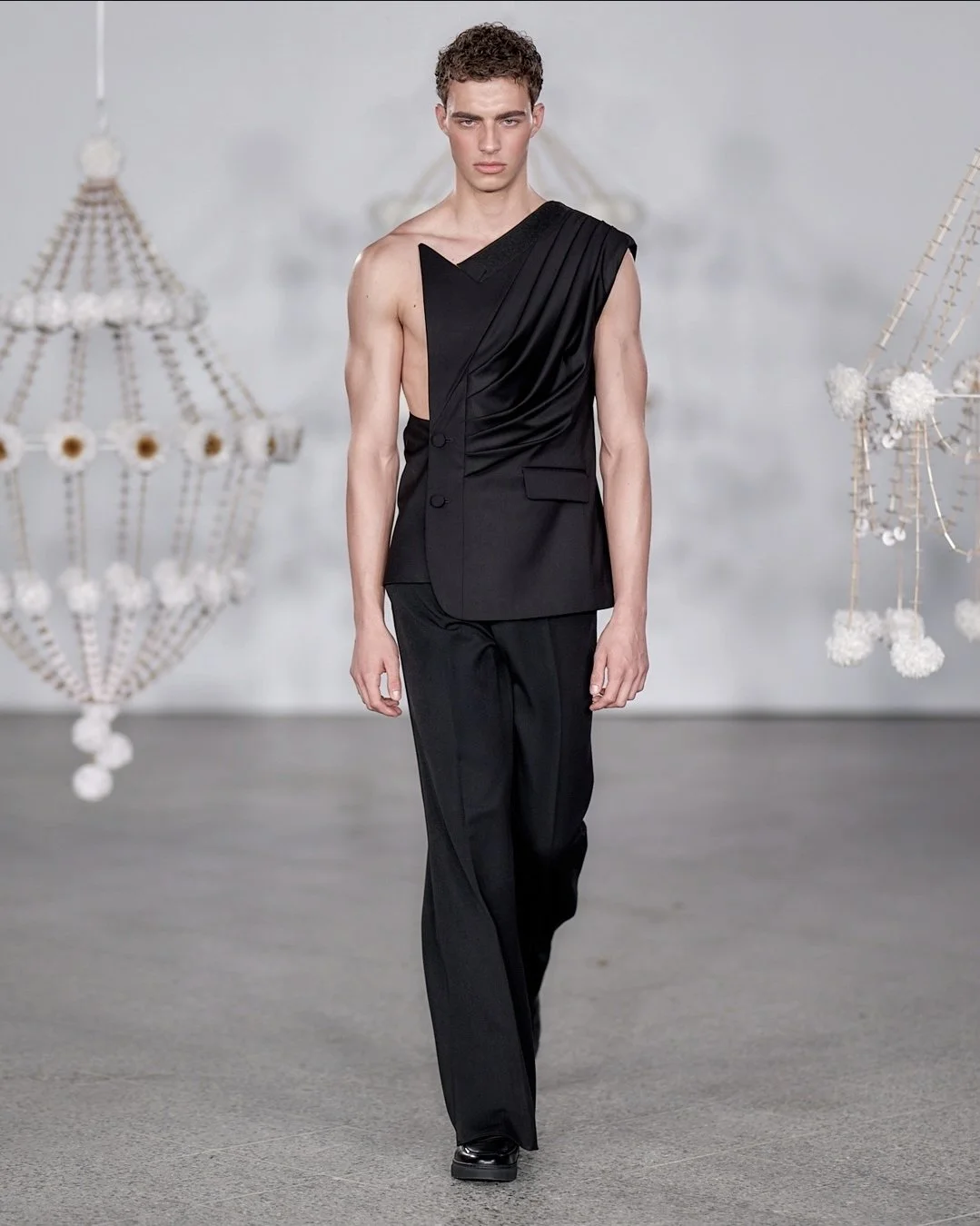
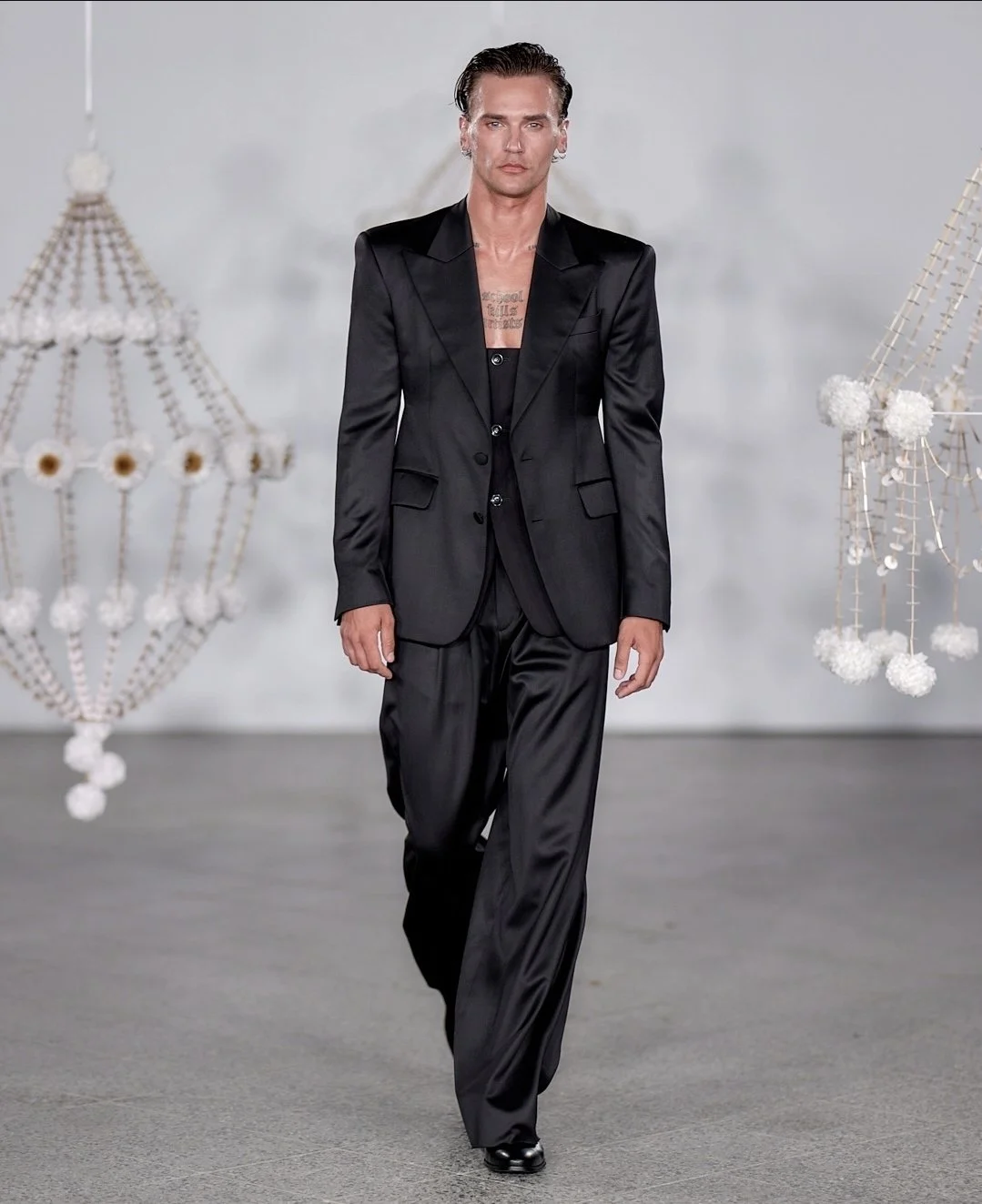
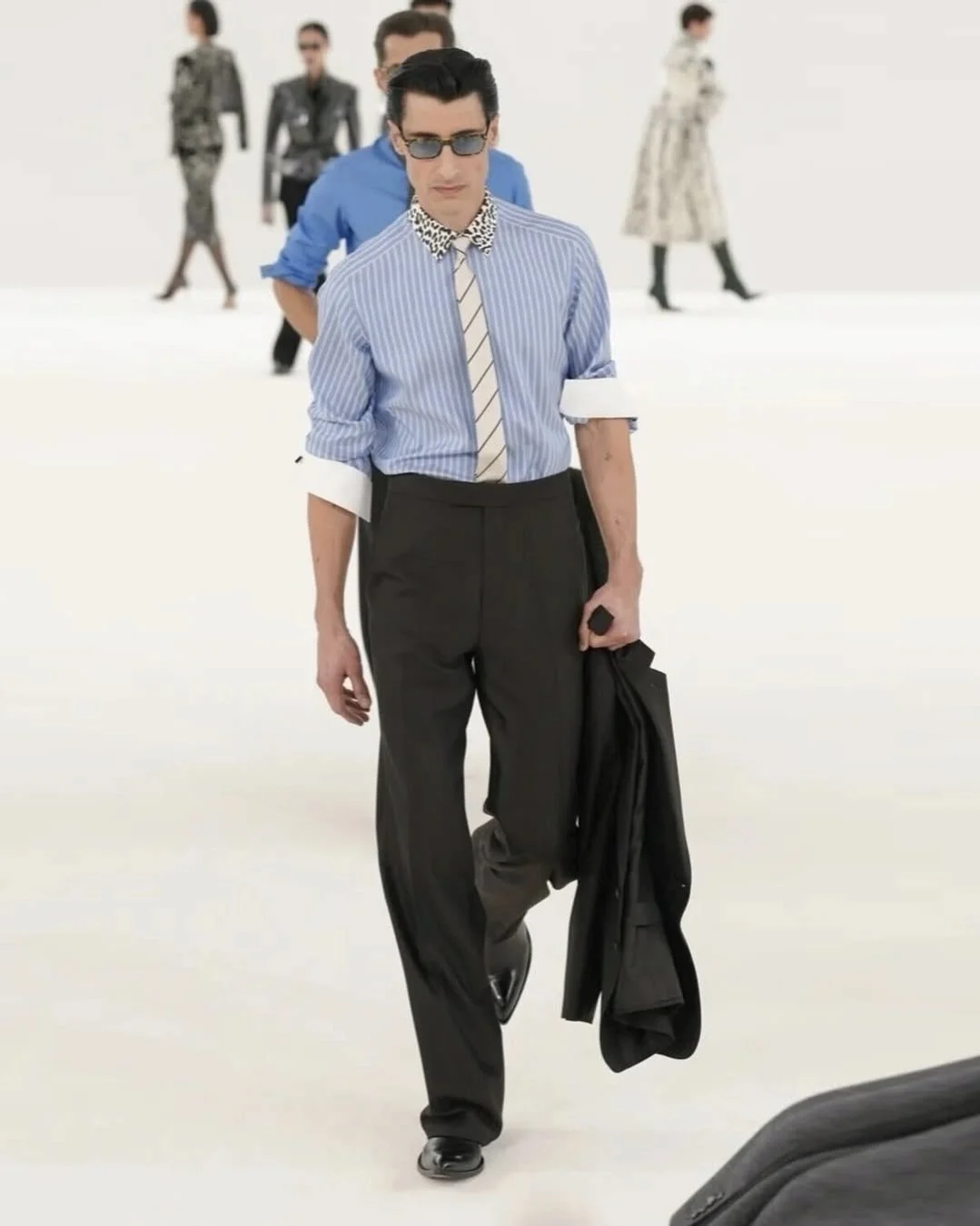
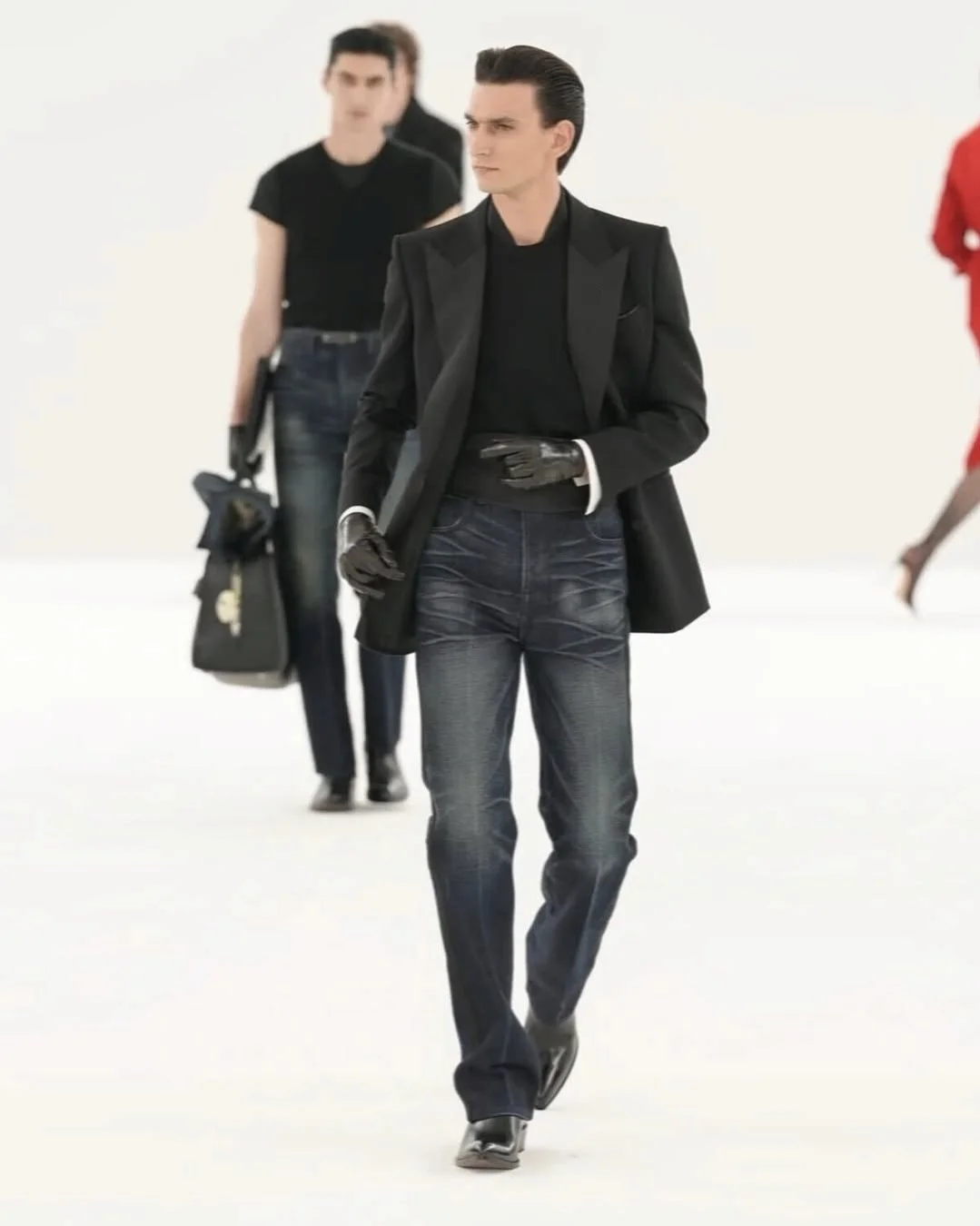
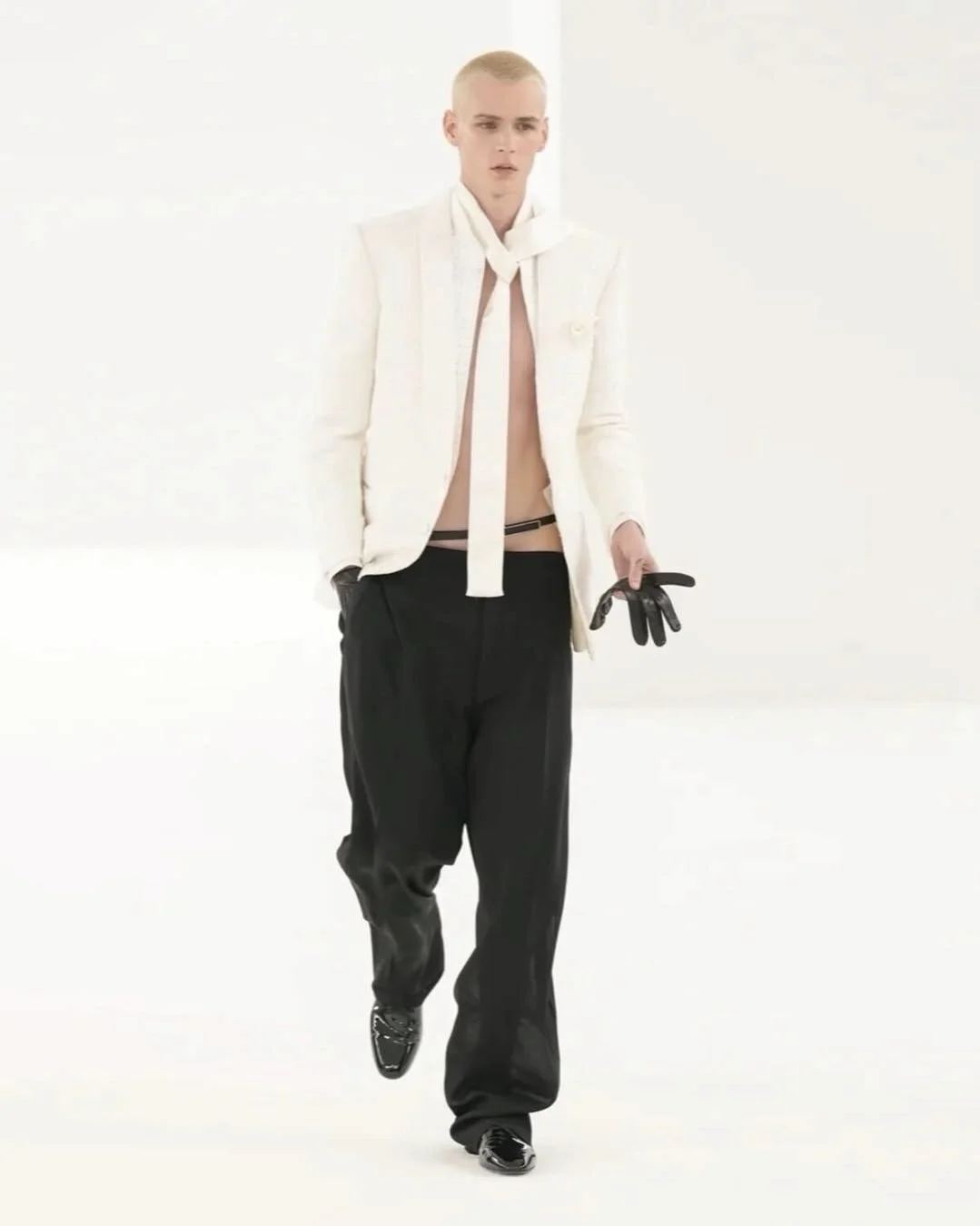
Tom Ford Fall Winter 2026 by Haider Ackermann: Our Favourite Looks

For the Autumn/Winter 2026 season, Haider Ackermann presented his vision for Tom Ford with a sharp sense of tension—balancing polished luxury with something darker, more subversive.

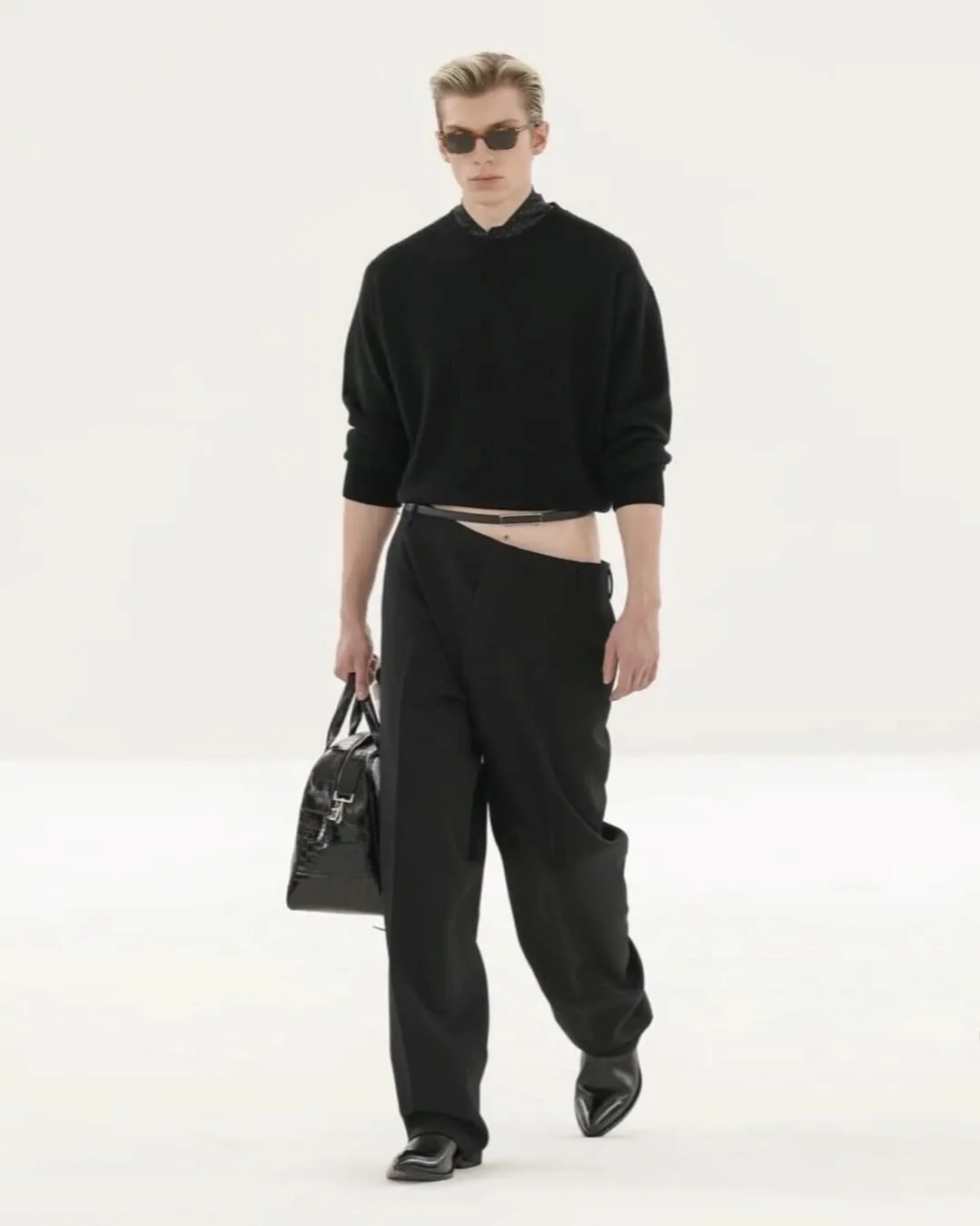
The collection moved effortlessly between two archetypes: the jet-setting rockstar and the eerily precise businessman reminiscent of Patrick Bateman from American Psycho. Ackermann explored this duality through a wardrobe that felt both glamorous and slightly dangerous, where impeccable tailoring met an undercurrent of menace.

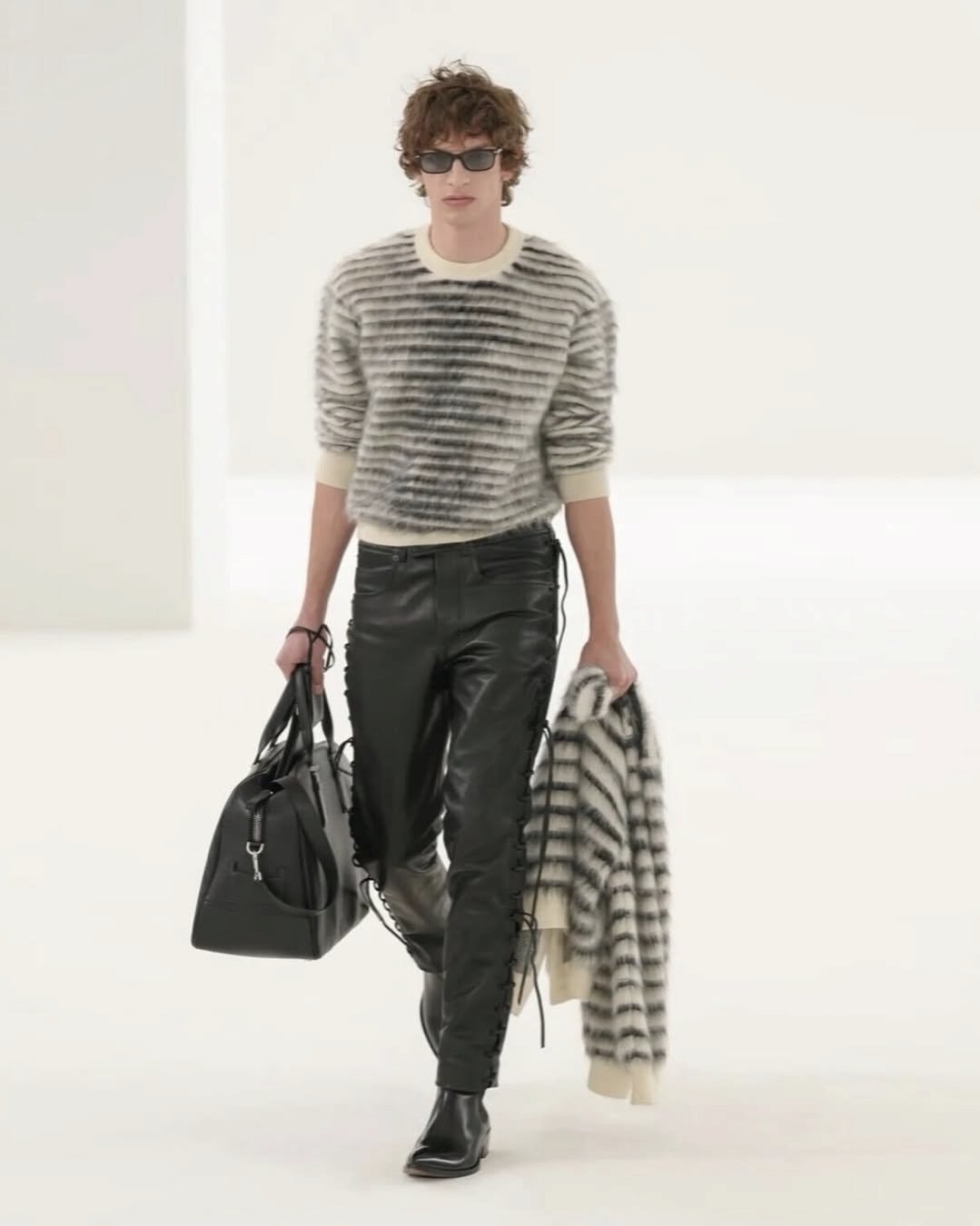
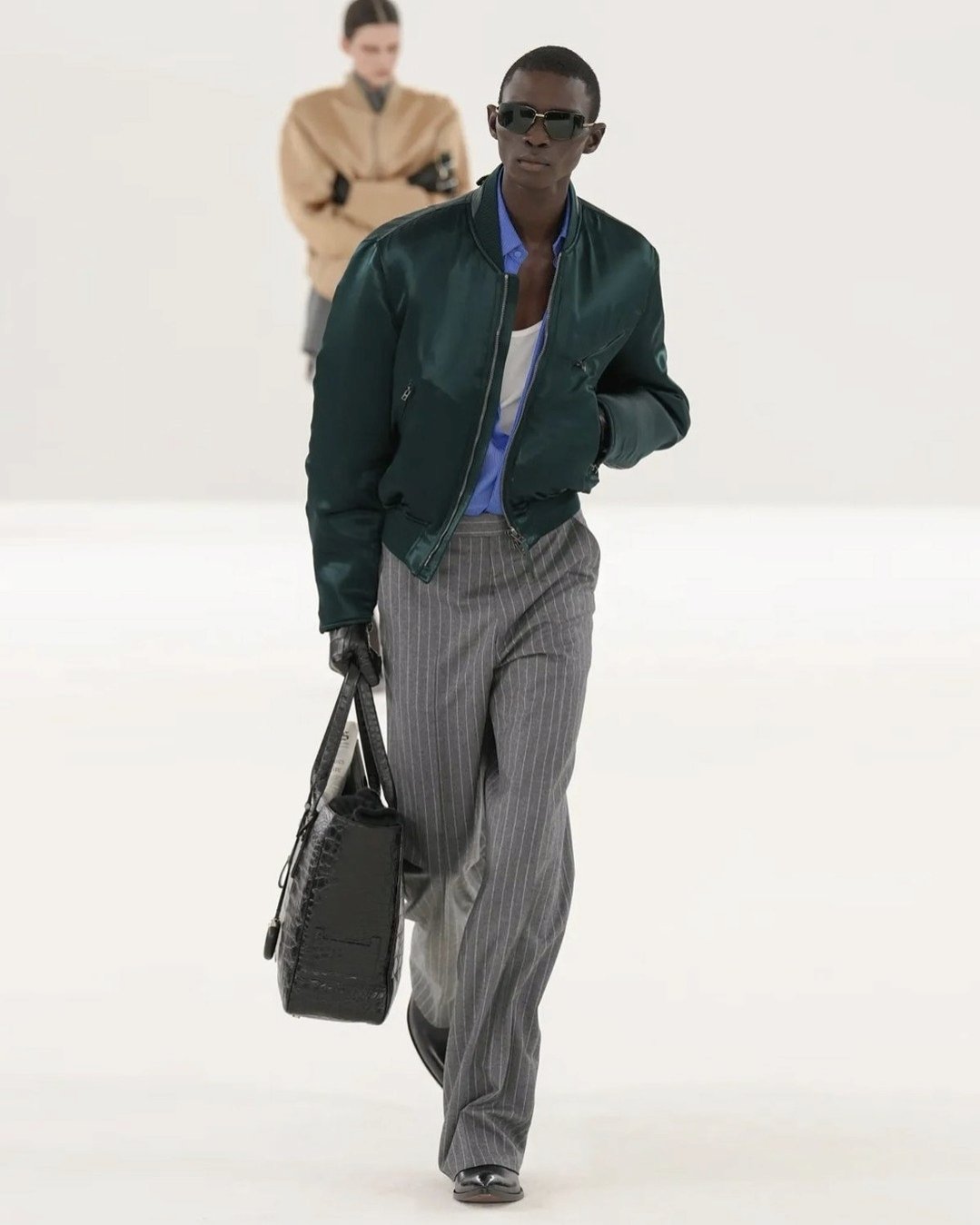
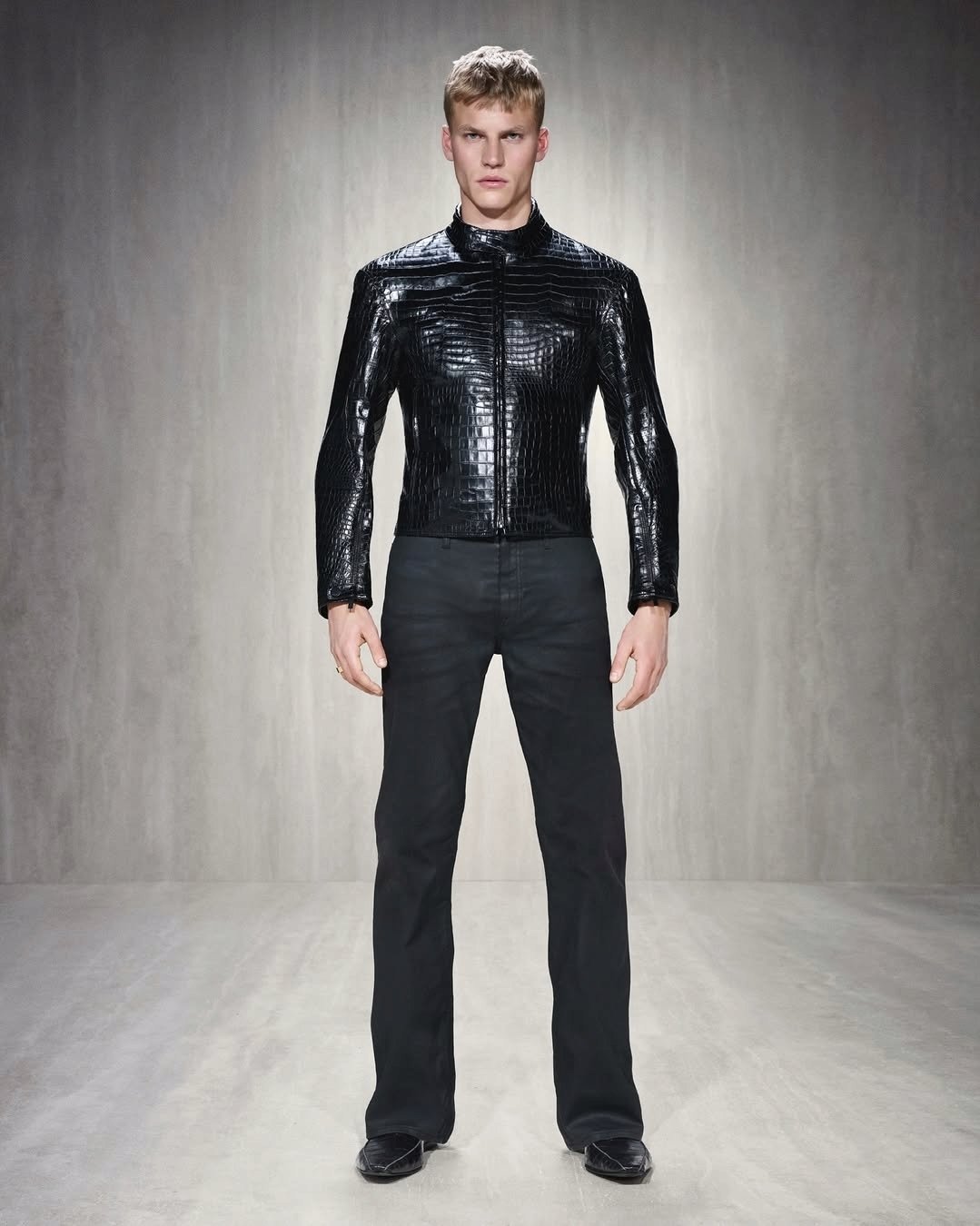
Silk bombers paired with tailored grey trousers suggested effortless travel elegance, while striped mohair knits and leather pieces added texture and attitude. Crocodile jackets, lace-up trousers and relaxed denim introduced a raw sensuality, while sharply cut ‘80s-inspired suits and contrast-collar shirts nodded to corporate power dressing with a seductive twist. Eveningwear appeared sleek and deliberate, carrying the unmistakable confidence associated with the house.

Accessories and styling amplified the mood. Many looks were finished with black leather gloves and slicked-back hair, reinforcing the collection’s sleek yet intimidating aesthetic. The effect was cinematic: models looked as though they were heading either to a private airport lounge or somewhere far more clandestine.

Among the standout pieces was a sharply tailored raincoat—an understated yet powerful reminder of the brand’s signature sophistication. In Ackermann’s hands, it became part of a wardrobe designed for nights that blur the line between elegance and intrigue.

With this collection, Ackermann proved that the seductive spirit of Tom Ford remains alive, even as it evolves. The result was a show where sexuality was anything but subtle—confident, polished, and just dangerous enough to keep things interesting.

Check out below our favourite looks:

Ann Demeulemeester's first boutique in Milan

Ann Demeulemeester has unveiled a new Milan address at Via Monte Napoleone 22, placing the brand at the center of the city’s luxury quarter. Housed in a former refectory, the boutique becomes the label’s second mono-brand store worldwide, after Antwerp.

Conceived under the direction of creative director Stefano Gallici, the 214-square-meter space unfolds across two levels connected by a staircase, with a private VIP room upstairs. Stripped-back walls, raw plaster, oxidized zinc, and black Italian herringbone wood define a restrained palette of black, white, and grey. The ceiling echoes the geometry of the floor, creating a subtle architectural rhythm.

Custom furnishings reinterpret historical forms with contemporary proportions, balancing weight and emptiness. Black linen seating and soft drapery temper the austerity, while large white canvases frame the collections in quiet focus. The opening coincides with an exclusive preview of Spring/Summer 2026 — Gallici’s latest vision for the house.

Demna’s Highly Anticipated Gucci Debut Lands in Milan

Milan Fashion Week has seen its share of entrances, exits, and expectations. But when Demna takes the reins of a house like Gucci, the industry holds its breath. The Georgian designer, known for redefining luxury through the lens of the everyday, has spent years building a world where a hoodie can carry as much weight as a gown. So what happens when that sensibility meets the marble halls of Italian heritage?
The answer, unveiled in a monumental, museum-like space surrounded by classical statuary, is less a revolution than a recalibration. Demna calls it Primavera, a palette of stylistic propositions for the people Gucci already speaks to, and those he hopes it will speak to next. It is a collection built on pragmatism, on clothes that require no pseudo-intellectual justification. They simply exist to be worn, to be enjoyed.

The clothes are about product. That is what Gvasalia keeps coming back to. Silhouettes, textures, materials. Lightness, ease, comfort. Body-aware shapes. There are seamless garments cut as close to the body as possible. Invisible heat-sealed edges. Engineered curved hems. Jackets appear multiple times. Low-cut jackets and horizontal pockets give things a streetwear posture. New shapes appear. Tracksuits merge into new forms. Leggings fuse with trousers. Jackets and tops become one ultra-fitted piece.

Footwear anchors the collection in the everyday. Manhattan, Demna’s first sneaker for Gucci, combines an ultra-minimal basketball shape with the slip-on ease of a mocassino. The Giovanni and Cupertino loafers erase the stiffness of traditional leather shoes, softening them into something that moves with you rather than against you.

Throughout the presentation, the soundtrack (five distinct genres curated by Loki) mirrors the collection’s juxtapositions. It is classical and contemporary, chaotic and cohesive, much like the mix of archetypes on the runway.
Built To Tempt

A REY Exclusive In-House Editorial, photographed in Limassol, Cyprus.

Photographed by Michael Geo

Styling Christos Christou

Starring Nicholas Charakis

In Conversation with Eddie Gavriilidis

Eddie Gavriilidis is one of the most compelling voices in contemporary fashion, blending Mediterranean heritage with bold queer expression. As the co-founder of House of Jaffa and a rising force on the international stage, he challenges conventions with authenticity and intention. In this conversation for REY Magazine, Eddie opens up about creativity, identity, and the power of visibility.

Photographed by Dimitrios Kleanthous

Styling Eddie Gavriilidis

Grooming Christos Theophanous

Interviewed by Christos Christou

Your journey has taken you from Greece to London and into the global fashion world. What was the turning point when you knew fashion was your calling?

Grew up inside art. My mother studied at the National School of Fine Arts in Athens, my father lived in fashion, so creativity wasn’t a choice it was the air. I had the references before I had the words. Passion showed up early, discipline came later on when I went to Central Saint Martins & Marangoni.

Somewhere between obsession, temptation and hard work, I stopped being a kid and became something new. A new person that had the guts to dress Gaga and Madonna, live, create fall in love and party hard with Lindsay Lohan. ;)

You’ve worked with major houses like Alexander McQueen and Tom Ford. What’s one lesson from those environments that continues to shape your design DNA?

At McQueen, I was designing embroideries, and my creativity was pushed to its limits. I learned how to illustrate emotion — that nothing is accidental, that chaos only works when it’s controlled. Tom Ford was the most charming person I’ve ever met. He introduced me to the world of fashion marketing and branding, where sexuality stopped being a taboo and became powerful, refined, and confident. I worked on pieces later worn by Anna Wintour, even at a dinner with Barack Obama — that was the moment I realized my work can reach a massive audience and the power to be seen by millions around the world.

Your work often challenges traditional gender and beauty norms. How do you approach designing for people rather than for categories?

I don’t design for genders; I design for desire. Bodies are just vessels; attitude is the real silhouette. When you strip the rules away, what’s left is power, vulnerability, sex. That’s where my work lives. Clothes should flirt, provoke, and give people the choice to define themselves. Fashion is language it shows our ethos, who we are or who we want to be, before we ever speak. Look at Madonna: from the very beginning, her fashion spoke first. Provocative, conceptual, fearless — you knew exactly what she wanted to say before she even started singing.

You joined Greece’s Next Top Model as one of the main judges, bringing a fresh and international perspective to the show. How did this opportunity come to you, and what made you say yes?

I’m always surrounded by people who push me further. A friend suggested it, the timing felt right, TV came when I was ready. I wanted to shake things up and push the girls and the boys, make them see fashion isn’t just clothes. It’s attitude, confidence, owning your story. I wanted to bring the global, modern edge that I’ve learned in Europe working with mega brands such as Burberry, Erdem and Victoria Beckham. Also Fashion people are real people bold, alive, part of life, not stuck in a bubble.

Stepping into the GNTM judging panel introduced you to a new level of visibility and connection with emerging talent—how has that experience, along with the responsibility it carries, influenced you personally and creatively?

GNTM isn’t just judging,  it’s feeding off the fearless boys and girls, breaking rules, and keeping everything real. It pushes me to take risks I might never have tried on my own. Watching them claim their space reminds me why I do what I do. We  create, to challenge, and to make people feel alive and stronger. I wanted the models to break the norms and find an unapologetic existence, that’s the kye from a model to become a super model.

Fashion today is deeply connected to personal storytelling. With House of Jaffa’s bold Queer Middle Eastern aesthetic, what story were you aiming to tell when you founded the brand, and how has that vision evolved through your work today?

House of Jaffa was born in London, but its soul comes from Jaffa — the port of Andromeda, where the sky bleeds into the sea. I’ve always been obsessed with the constellations that guided travellers, the myths of heroes like the Dioscuri, and the raw, electric energy of bodies in motion. Our designs are charged with desire, with tension, a celebration of bold, fearless beauty. House of Jaffa isn’t about borders or labels it’s about the journey, the fire, the light, and the thrill of being unapologetically you.

The label blends Mediterranean romanticism with gender-fluid silhouettes. How do cultural roots influence your creativity?

I’m Greek, but my heritage traces back to merchants who moved from Spain to Italy, through Asia Minor, and into Greece. Golan comes from French, Moroccan, and Egyptian roots, with a grandfather who was a diplomat and a father who grew up all across Africa. We both carry layered histories, and grew up on varied and rich iconography and superstitions. We fused all of that with our London multiculturalism education.
Our creative start point comes from the Mediterranean sun on bare, tanned skin, the heat in August that makes you sweat and burn with desire.

House of Jaffa explores identity, sensuality, and freedom. In today’s climate, do you feel fashion can still be a form of activism?

Fashion is the body, desire, and danger you wear. At House of Jaffa, every piece drips with lust, tension, and skin-on-skin heat, it provokes, it questions, it seduces. Dressing isn’t just clothes; it’s an act, a performance, a little rebellion you carry on your own body.

You and Golan Frydman co-founded House of Jaffa. How would you describe your creative chemistry?

Working with Golan is love and trust in motion. We play ping-pong with ideas until a new monster is born  wild, raw, demanding attention. Then we tame it, illustrate it, dress it in silks, cottons, and linens, and bring it to life

Many creative duos struggle with balancing personal and professional life.How do you and Golan maintain harmony between the two?

of course we do. It’s a challenge like any couple. But the silver lining? Our work fuels our chemistry. We fight, we laugh, we push each other… and sometimes the tension turns into something electric. That energy seeps into the brand, making it bolder, wilder, and undeniably alive.

As one of the few Greek fashion figures who is openly gay and open about your relationship with Golan, what does that visibility mean to you personally and creatively?

Fuck the Homophobes, they are medieval suppressed little beings.

I spent my adult life in London sexuality, origin, gender… none of it’s a label there. It’s just life. We’re all different. That’s the point. What matters is embracing love, companionship, and celebrating who we are.

In a time when LGBTQ+ rights are being challenged globally, what do you believe the queer community needs most right now?

I don’t do speeches, that’s not me. But here’s the truth: queer people are just people. No apologies, no labels, we live, we desire, we move through the world like anyone else. And when rights are taken away, that’s when you get up and fight. Make space for a better future.

What’s next for the House of Jaffa?

The brand started in the shadows, cruising, hushed lust, back-alley encounters behind the Ottoman hammam. Now, House of Jaffa is diving headfirst into myth, desire, and Mediterranean heat. We’re twisting the story of Andromeda, tied to the rock to be sacrificed, and the Dioscuri, two brothers who died for each other’s love.  Moments where gods, monsters, and humans collide in lust and vanity. And here’s a scoop for you… ;) After shows in London, Paris, and Jaffa, our next stop will be Athens this May.

And finally — what does freedom mean to Eddie?

Freedom… Is doing what I want. Living, creating, and moving through the world without caring what labels others choose to use for me, their gossip, their shallow ideas about me are meaningless. And freedom from this means Following my instincts, taking risks, making mistakes, and owning it all.

WE LOVE David Gandy's New Wellwear Campaign

Founded in 2021, David Gandy Wellwear is the supermodel’s own lifestyle brand, combining fashion, function, and wellness in elevated everyday essentials.

David Gandy, a name synonymous with timeless style, returns with a new essential from his lifestyle brand, David Gandy Wellwear. The Ultimate Trunk is a masterclass in understated luxury—crafted with a premium cotton-modal-elastane blend and enhanced by Wellwear Breathe technology, offering antibacterial, breathable, and odour-resistant comfort from day to night.

Reuniting with longtime collaborator Mariano Vivanco, the launch campaign captures Gandy through a softer, more intimate lens. Known for their iconic past work, the duo delivers imagery that’s effortless yet powerful, refined yet raw.
Stripped of bold logos and gimmicks, the Ultimate Trunk puts fit and feel first. It’s a reminder that confidence begins with the base layer—and Gandy knows better than most what makes a perfect pair.

Equilibrium

A REY Exclusive Fashion Editorial, produced in London, UK.

Art Direction & Styling Antonia Barath

Photographed by Alex Pinero

Grooming Travis Nunes

Starring Callum Simpson @ SUPA Worlwide

KING OF RAY

A REY Exclusive Fashion Editorial, photographed in Athens.
Photographed & Directed by Alexi Charovas

starring Aggelos

The body becomes a stage where gender rehearses itself; endlessly, restlessly. One moment, the chest is armour: sculpted, hard, virile. The next, it is pierced by softness: glitter, petals, shadows of leaves. Butler reminds us that gender is never essence but repetition, a series of acts that harden into “truth.”
Yet in the cracks of performance, vulnerability seeps through. Flowers erupt from the waistband, not as decoration but as insurgents. They expose the absurdity of virility when stripped of its theatre. Muñoz would call this a glimpse of queer futurity: masculinity remade in colour, light, and excess.
Ahmed teaches us that orientations matter, and here, the body bends, twists, reclines into new alignments that disorient the straight line of heteronormativity. Each image oscillates. The stripes reads a prison of expectation, yet also a runway for camp. The torso flexes, but the hand trembles. Glitter wounds and heals at the same time.

This is not contradiction but coexistence: virility and vulnerability locked in the same frame, refusing to cancel each other. The battle is not to defeat masculinity but to expose its costume. To wear it, distort it, queer it until its weight gives way to possibility.

Alexi Charovas

PASTORALE

A REY Exclusive Editorial

Photographed & Styled by Alexander Yantyushev

starring Georgy Amoev @ Lumpen

Pietro Boselli Gets Wet — And Philosophical — in His Steamiest Shoot Yet

Pietro Boselli is no stranger to thirst traps — but his latest series dives deeper. Shot against the sun-drenched backdrop of Piana degli Ulivi di Ostuni, Aliquid Aqua Inest (Latin for “there is something in the water”) sees the sculpted polymath turning a simple outdoor shower into a moment of sensual meditation.

Yes, the water clings. Yes, the light hits just right. But beneath the heat and skin, there’s something more: a quiet invitation to rethink what pleasure, wellness, and modern masculinity really look like.

With 3.4 million Instagram followers and counting, Pietro isn’t just serving body — he’s curating a lifestyle. Call it la dolce vita 2.0: equal parts philosopher and fantasy, sweat and soul.

These aren’t just hot pics — they’re a vibe, a vision, a challenge to live (and look) beautifully.

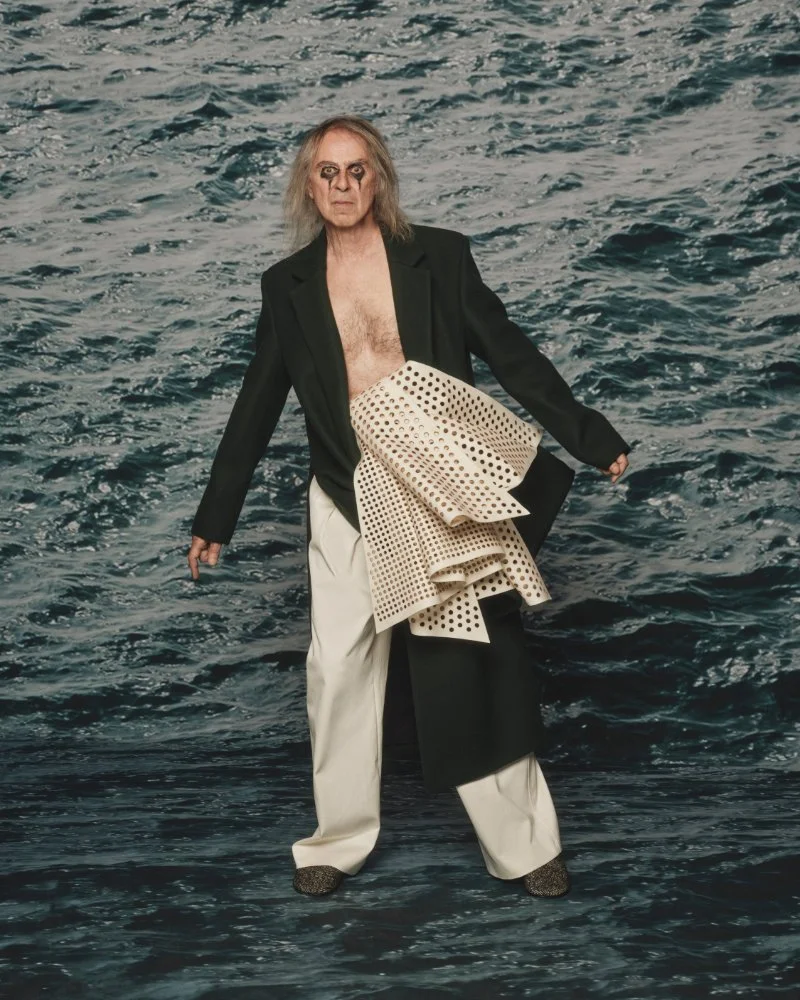
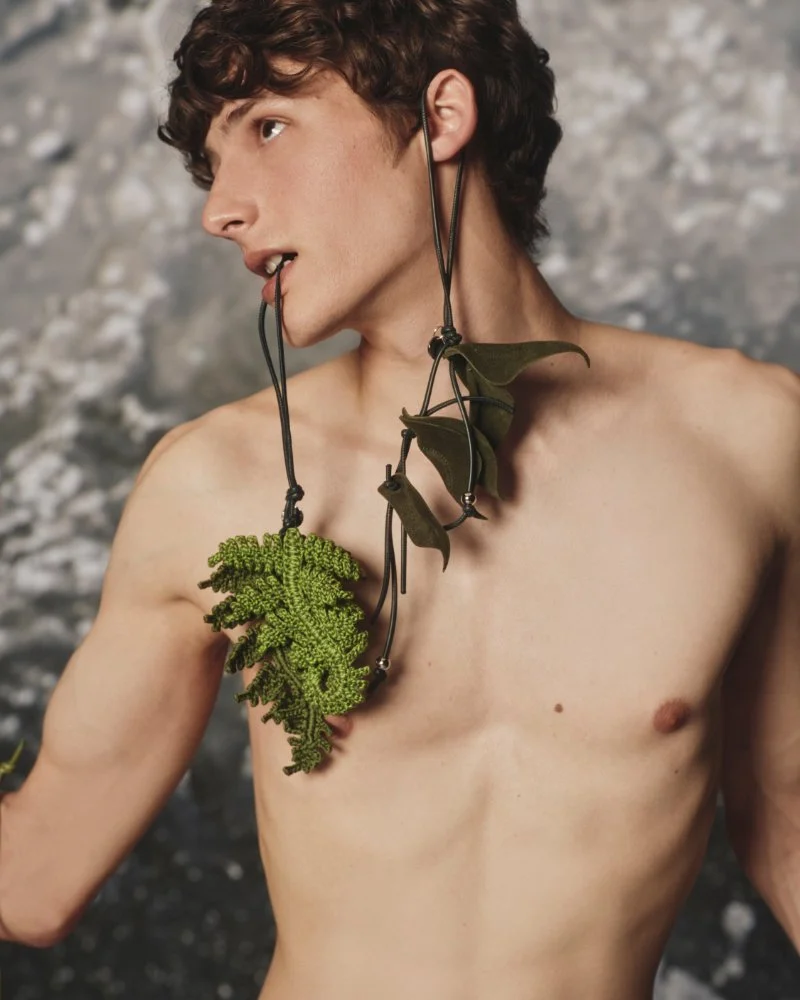
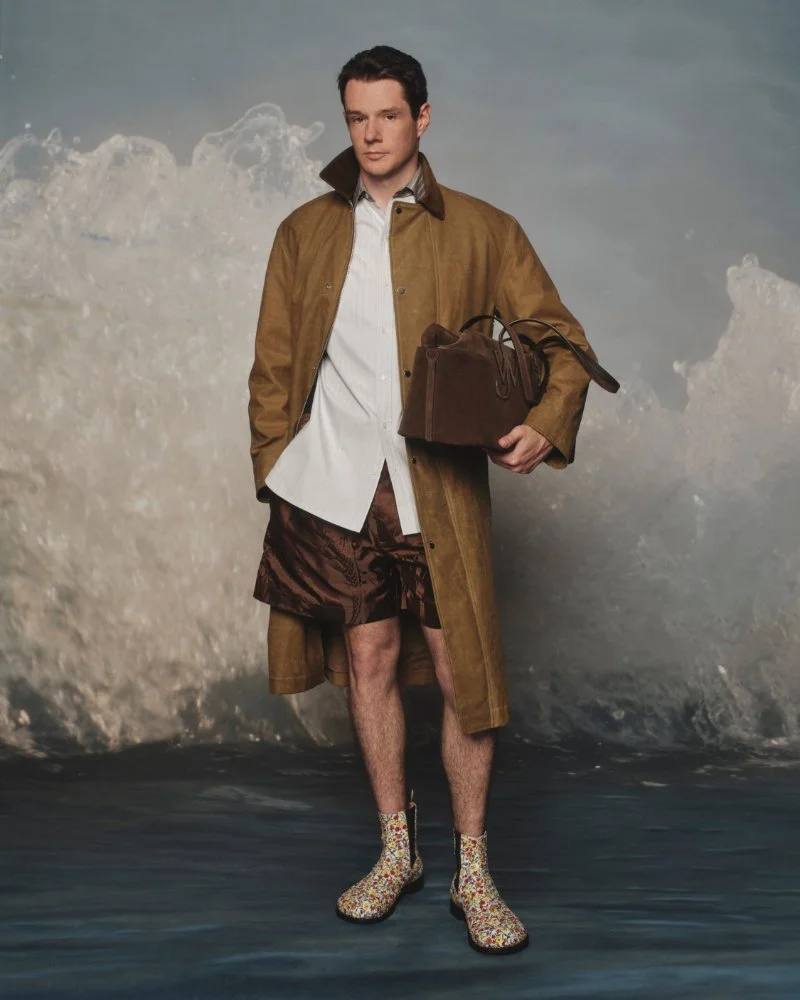
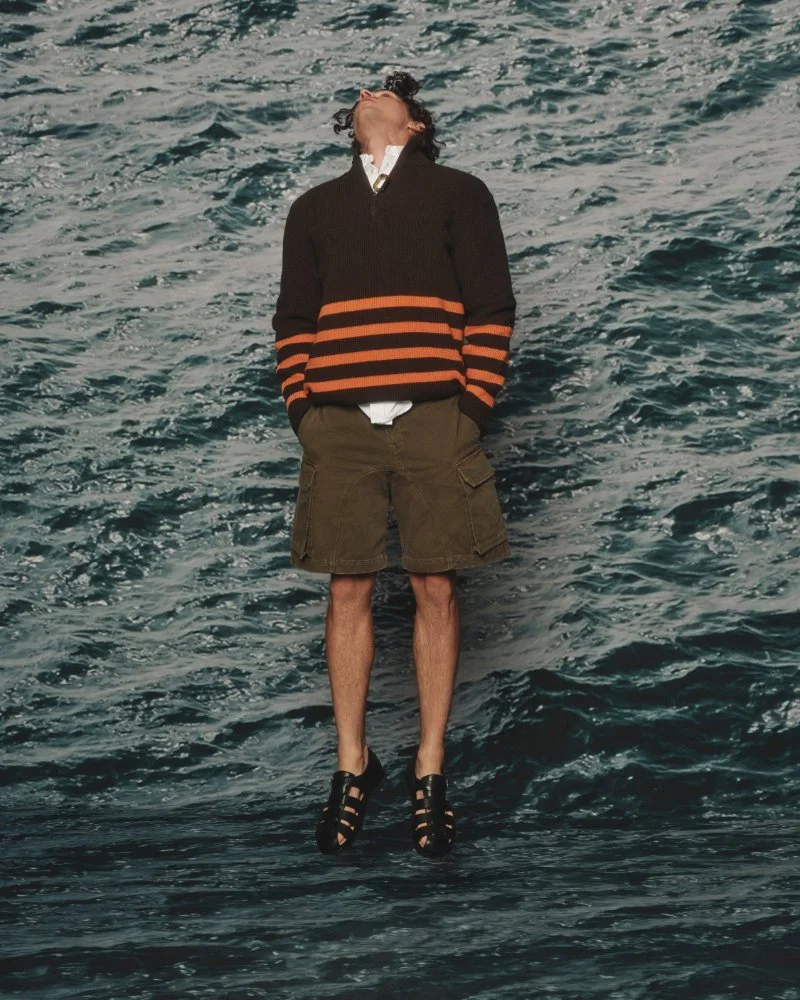
LOEWE’s Fall/Winter 2025 Campaign: A Study in Craft

The LOEWE Fall/Winter 2025 collection presents itself as a scrapbook of ideas. This approach feels intentional and personal, focusing on artisanal craft as its central theme.

This focus continues through a collaboration with the Josef & Anni Albers Foundation. The clothing and accessories feature tactile surfaces that take inspiration from Josef Albers’s Homage to the Square paintings and Anni Albers’s pictorial textile work, which used thread for artistic exploration.

Rene Tiger

A REY Exclusive Story photographed in Berlin, Germany.

Produced & Photographed by Andrej Russkovskij,

Introducing Rene Tiger.

Tom Holland for Prada Paradigme Fragance Campaign

Tom Holland Fronts Prada Paradigme: A New Expression of Modern Masculinity

In Prada's latest fragrance campaign, Paradigme, actor Tom Holland embodies a quiet confidence that mirrors the scent itself — refined, grounded, and refreshingly understated. Paradigme reflects a modern shift in masculinity, where presence is valued over projection and grooming becomes an act of self-care rather than performance.

The fragrance opens with a bright note of Calabrian bergamot, while a heart of bourbon geranium introduces a crisp, herbaceous green that disrupts conventional woody structures. Anchored by an ambery woody base, Paradigme achieves a sophisticated duality — where verdant freshness tempers warmth and tradition meets subtle rebellion.

This duality is echoed in the bottle design. Prada’s iconic inverted triangle is reimagined in a gradient lacquer that fades from black to green, visually articulating the tension between structure and fluidity.

With Holland as its face, Prada Paradigme positions itself as fragrance-as-accessory — an invisible signature for those who seek depth without dominance. It’s a statement of modern elegance: noteworthy, never overbearing.

RUENDA

A REY exclusive Story, produced in Majorca, Spain.

introducing RUENDA

Photographed by Flor Rajo.

Denim Story featuring Calvin Klein.